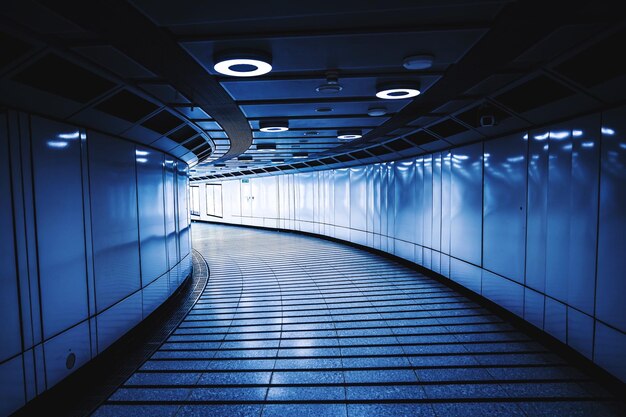
Navigating Oklahoma City's Underground Pedestrian Network
The underground passages beneath Oklahoma City's downtown core form a practical alternative to street-level walking, especially during summer heat or winter weather. This guide explains what exists, how the network actually functions, and which sections are most useful for travelers and commuters. After reading, you'll understand which passages connect major hotels and attractions, where gaps in the network create detours, and whether routing through the underground makes sense for your trip.
What the Underground Actually Covers
Oklahoma City's underground system is not a unified metro or subway network. Instead, it consists of separate, mostly disconnected pedestrian tunnels built between individual downtown buildings over several decades. The passages primarily serve office workers and occasional tourists, not transit riders.
The most established section runs beneath the Bricktown district, where tunnels connect several buildings and provide climate-controlled access during the scorching summers that regularly exceed 95 degrees from June through August. Another cluster exists under the CBD (Central Business District) north of Main Street, though these passages do not form a continuous loop and require navigation between separate tunnel systems.
The passages are publicly accessible during standard business hours, though access points and hours vary by building. Some tunnels close on weekends or after 6 p.m. This makes the network unreliable for evening travelers or weekend visitors who cannot rely on underground routes as their sole way to move between downtown hotels and attractions.
Practical Limitations for Visitors
Travelers should not expect the underground system to function as a complete alternative to street navigation. Significant gaps exist between tunnel clusters. Walking from a hotel in the Midtown district to attractions in Bricktown, for example, requires above-ground travel for at least four blocks. Many ground-level attractions, including the Oklahoma City National Memorial & Museum (located at 620 North Harvey Avenue), have no underground connection at all.
Wayfinding signage is inconsistent. The passages lack integrated maps at entry points, and directional markers are sparse. First-time users often find the tunnels confusing, with dead ends and multiple level changes that make navigation slower than simply walking above ground.
The network's utility depends heavily on your starting and ending points. If both your hotel and your primary destination sit within the Bricktown tunnel cluster, underground passage saves time and discomfort. If you're traveling from a downtown hotel to the Stockyard City district (south of downtown near SE 23rd Street) or to the Arts District (north of downtown near NW 10th Street), the underground adds steps rather than eliminating them.
Where the Tunnels Provide Real Value
The Bricktown section between the Skirvin Bricktown Hotel, the Chesapeake Energy Arena, and surrounding restaurants represents the most finished and traveler-friendly portion. This cluster includes restaurants and shops accessible from the tunnels themselves, making underground dining possible in summer months when street-level temperatures become uncomfortable.
The CBD tunnels north of Main Street work best for workers with fixed offices; visitors following an event-based or attraction-based itinerary will find them less useful. These passages connect several office buildings but rarely lead directly to public attractions.
The tunnels do function as an emergency refuge during severe summer storms or extreme heat events. Oklahoma City experiences occasional severe thunderstorms with heavy rain and lightning, particularly in spring and early summer. The underground passages provide a legitimate shelter option if you're caught downtown during an afternoon storm.
Seasonal Considerations
Summer navigation differs substantially from winter use. From June through September, when temperatures exceed 90 degrees on most days, the temperature difference between above-ground (100+ degrees with direct sun exposure) and underground (roughly 72 degrees year-round) justifies a modest detour. Winter presents the opposite calculation: outdoor walking in January and February averages in the 40s, making the tunnel alternative unnecessary for most visitors.
Spring and fall offer the least incentive to use the tunnels. Comfortable outdoor temperatures mean weather provides no advantage, and you'll see more of the city and experience the downtown streetscape by walking above ground.
Access and Hours
Entry points are typically located at major building lobbies and office tower ground floors. The Cherokee Building, located at 20 North Broadway, provides public tunnel access. Parking structures downtown also connect to the tunnel system, making underground passage logical if you've paid for parking in a structure rather than relying on street parking or ride-sharing drop-offs.
Tunnels generally operate during business hours, roughly 7 a.m. to 6 p.m. on weekdays. Weekends see reduced or no access through many passages, as the underground system was designed for office workers rather than leisure travelers. If you're visiting on a Saturday or Sunday, plan your downtown route above ground.
Planning Your Downtown Movement
For most leisure visitors, the underground system should not be your primary navigation tool. Use it as an option rather than a default route. If you're moving between two points and both sit within the Bricktown tunnel network, and the weather is extreme, routing underground can save discomfort.
Map your specific hotel and attraction locations before arrival. If both are within the CBD or Bricktown clusters, investigate the specific tunnel entry and exit points. If they're not, plan your street-level route instead. Oklahoma City's downtown grid is straightforward and walkable during reasonable weather, making above-ground navigation faster and more rewarding than searching for tunnel connections that may not exist.
Carry a phone with Google Maps or a similar navigation app loaded offline. The tunnels are not consistently marked online, but having a general downtown map prevents disorientation if you do venture underground.