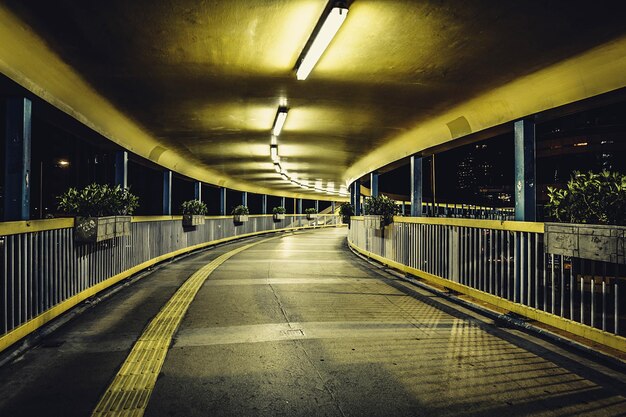
Underground Routes Through Downtown Oklahoma City
The tunnel system beneath downtown Oklahoma City connects eight city blocks and serves as a climate-controlled alternative to street-level navigation. This guide explains what the tunnels connect, how to use them, and what practical advantages they offer visitors and workers moving between hotels, restaurants, parking, and offices.
What the Tunnel System Actually Is
Oklahoma City's tunnels are not a comprehensive underground network. They form a linear route running primarily north-south beneath Robinson Avenue and east-west beneath Main Street, linking the Central Business District with the Bricktown Entertainment District. The system consists of corridors with retail storefronts, restaurants, and access points to major buildings rather than a single unified passage.
The tunnels opened in phases during the 1980s and 1990s as a response to Oklahoma's weather extremes. Summers regularly exceed 95 degrees, and winters bring ice storms that make street-level movement inconvenient for downtown workers and hotel guests. The enclosed system allows foot traffic to move between destinations without exposure.
Entry Points and Navigation
The primary access nodes are the Parking Plaza on Robinson Avenue (north end), the Myriad Botanical Gardens complex on Reno Avenue (south end), and multiple entry points along Main Street. The Bricktown tunnel connects to the Bricktown Entertainment District near the Oklahoma River.
Length varies depending on your destination. A walk from the Robinson Avenue parking structure to Bricktown spans roughly six blocks underground. The corridors are marked with directional signage, though the layout can feel maze-like on first visit. Pathways are generally 10 to 12 feet wide with fluorescent and natural lighting piped in from above.
Elevator and stair access are distributed throughout the system. Most major downtown hotels, including those on Robinson Avenue and near the Myriad Gardens, have direct tunnel connections. This matters for guests arriving during extreme weather or those with mobility limitations.
Why the Tunnels Matter for Travelers
Weather protection. Oklahoma City experiences severe temperature swings. July highs of 96 to 100 degrees paired with humidity make street walking uncomfortable for tourists not acclimated to the climate. Winter ice storms can render sidewalks hazardous without warning. The tunnel system maintains 68 to 72 degrees year-round, allowing reliable navigation regardless of conditions.
Parking efficiency. If you're driving downtown, parking garages have direct tunnel access. This eliminates street-level walking time and weather exposure between your car and destination. Visitors staying downtown can park once and reach multiple restaurants, shops, and attractions without returning to their vehicle.
Reduced walking distance. Tunnel routes often cut across city blocks rather than requiring street-level perimeter walking. A journey from downtown parking to a Main Street restaurant may cover three blocks underground but would require walking six blocks on streets.
Connection to attractions. The Myriad Botanical Gardens (free to walk the grounds, paid admission for the Crystal Bridge Tropical Conservatory at $15 for adults) has tunnel access. The Oklahoma City Museum of Art at 415 Couch Drive is a five-minute walk from the Main Street tunnels. These connectors reduce navigation friction.
Practical Limitations
The tunnels close at 6 p.m. on weekdays, creating a hard boundary for evening movement. If you plan to explore Bricktown restaurants or nightlife after dark, you'll navigate streets and sidewalks. This timing works against visitors with late dinner reservations in areas not directly on Robinson or Main Street.
Retail and food options inside the tunnels are limited compared to street-level downtown. You'll find a few cafes and convenience shops, but they operate standard business hours (typically 7 a.m. to 5 p.m. weekdays). This makes the tunnels practical for workday lunch or morning coffee but not an evening destination.
Wheelchair accessibility is uneven. Many tunnel segments have elevators, but not all routes provide barrier-free access throughout. If you require accessible navigation, confirm specific entry points with your hotel concierge before relying on the tunnels for mobility.
Alternative Street-Level Routes
Downtown Oklahoma City remains navigable by foot during reasonable weather. The Arts District (bounded roughly by NW 10th and NW 5th Streets, between Robinson and Walker Avenues) sits just north of the Central Business District and offers pedestrian-friendly sidewalks with galleries, restaurants, and street trees. The Automobile Alley Historic District (NW 23rd Street between Robinson and Lee Avenues) is walkable but sits outside tunnel access.
Bricktown's street-level environment is pedestrian-oriented with wide sidewalks, shade from restored brick buildings, and clear sightlines. The district's restaurants and entertainment venues are designed for street access, making tunnel navigation unnecessary once you're in that area.
When to Use the Tunnels vs. When to Skip Them
Use the tunnels: during July and August when street temperatures become uncomfortable; after winter ice storms; when moving between downtown parking and your destination during workday hours; if you have mobility concerns and need climate control and direct building access.
Skip the tunnels: if you're exploring the Arts District or Automobile Alley; during evening hours after 6 p.m.; if you want the street-level experience of Bricktown's historic architecture; if you're staying at a hotel not connected to the system and would spend extra time finding access points.
Practical Takeaway
The tunnel system is a functional alternative to street navigation, valuable specifically for weather mitigation and parking-to-destination efficiency. It's not a tourist attraction or exploration opportunity; it's a utility. Visitors should view tunnels as a tool for getting from your parked car to a restaurant or hotel during uncomfortable conditions, not as part of your itinerary. Experiencing downtown Oklahoma City means walking Bricktown's pedestrian routes, the Arts District's galleries, and the landscaped edges of the Myriad Gardens. The tunnels support efficient movement to those places.