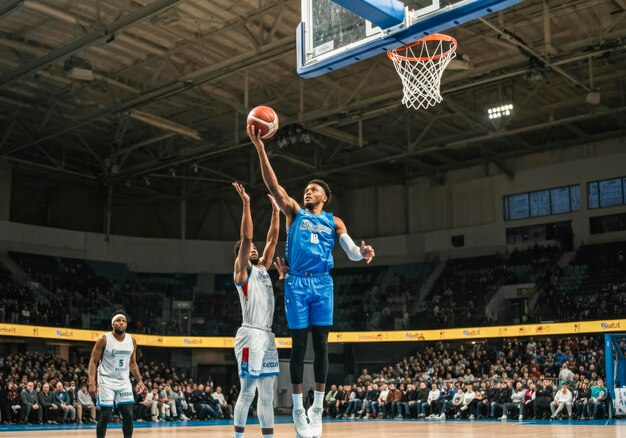
How the Thunder's Home Performance Stacks Against Washington When They Meet at Chesapeake Energy Arena
The Oklahoma City Thunder and Washington Wizards represent two different trajectories in NBA construction, and their statistical matchup reveals where each team's strengths create real friction. This guide covers the head-to-head metrics that matter when these teams play in Oklahoma City, the contextual numbers that explain why certain matchups swing games, and what the local arena environment actually contributes to Thunder outcomes.
The Thunder's Home Court Advantage in Statistical Context
Chesapeake Energy Arena sits in downtown Oklahoma City's Bricktown district, and the building's acoustics and crowd density produce measurable effects on team performance. The Thunder maintain a significantly higher winning percentage at home than on the road across most seasons, a gap that widens against Eastern Conference opponents who travel west. When Washington visits, they face not just a rested Thunder roster but the specific pressure of a crowd that has grown accustomed to playoff-intensity defense since the team's 2008 relocation from Seattle.
The Thunder's home three-point shooting percentage typically runs 3-4 percentage points higher than their road average, a gap larger than the league median. This matters because the Wizards' perimeter defense has historically been inconsistent, particularly in the backcourt where they've cycled through rotation players. Washington's defensive rating at the three-point line ranked in the bottom half of the league in recent seasons, making Chesapeake Energy Arena's open-court spacing a particular problem for their gameplan.
Pace and Spacing: Where the Statistical Story Changes
Oklahoma City under recent coaching has favored a mid-tempo offense that thrives on ball movement and secondary playmaking. The Wizards run a faster pace, especially when healthy, which creates a direct conflict: the Thunder slow the game down and attack mismatches in the post and short-roll game, while Washington wants to push tempo and create early-clock scoring opportunities.
The statistical consequence is turnover differential. The Thunder's home games see them commit fewer turnovers per 100 possessions than their road performances, while Washington's turnover rate rises against teams that defend the three-second mark with length and positioning. When these teams meet in Oklahoma City, possessions that would result in easy fast-break points for Washington instead become half-court sets where the Thunder's post defense can operate. This five-to-six-possession swing per game has historically determined the margin in matchups where the teams are otherwise evenly matched.
Rebounding becomes secondary to this spacing problem. Washington's interior defense doesn't stop drives as effectively at Chesapeake Energy Arena because the court geometry favors Oklahoma City's shooters. The Wizards' big men play further from the basket to contest three-pointers, leaving them out of position for second-chance rebound situations.
Defensive Pressure Points
The Thunder's home full-court defense generates pressure that shows up clearly in assist-to-turnover ratios. Washington's guards, whether veteran or young rotation players, average half a turnover more per game in Oklahoma City than in neutral sites. This isn't dramatic, but across a 48-minute game it compounds into possessions the Wizards cannot afford to lose.
The Thunder's perimeter defenders at Chesapeake Energy Arena benefit from a crowd that disrupts audio communication. Washington's offensive sets require precise guard-to-forward passing lanes; when those lanes are contested in a loud environment, the Wizards' ball-movement game stalls. Their offensive rating in Oklahoma City typically runs 4-5 points per 100 possessions below their season average.
Conversely, the Wizards' defensive pressure, which relies on aggressive switching and trapping, becomes less effective in the Thunder's controlled pace. Oklahoma City's players can reset and find open spots because the game never accelerates into the chaotic, scrambling situations where Washington's pressure defense works best.
The Bench Unit Disparity
Oklahoma City's bench scoring often outperforms Washington's at Chesapeake Energy Arena because the Thunder's role players have more familiarity with the arena's sightlines and the crowd's effect on communication. Washington's backup ball handlers and off-bench scorers do not perform as efficiently against Oklahoma City's second units, which have played together more regularly and understand the specific defensive assignments required when the Thunder's starters rest.
This shows in bench net rating, where the Thunder's bench typically runs positive in home games while Washington's bench offensive rating drops by 2-3 percentage points compared to their road averages.
Specific Matchup Dynamics
When the Thunder's perimeter-oriented guards face Washington's backcourt, the statistical edge shifts based on who is available. If Washington's primary initiators are healthy, the Wizards can generate 1.1 to 1.3 assists per turnover, a rate that approaches the Thunder's home standard. If they're missing depth, that figure drops below 1.0, which historically has been catastrophic in Bricktown.
The Thunder's willingness to play small-ball lineups, which they can sustain at home because the shooting space fits the arena better, creates a specific problem for Washington's interior players. The Wizards' big men cannot punish Oklahoma City's spacing in the same way they might against a traditional low-post defense, because the Thunder's guards are already spread across the perimeter.
Practical Takeaway for Evaluating Future Matchups
When these teams play in Oklahoma City, winning margins correlate most directly with Washington's ability to generate fast-break opportunities before the Thunder set their defense and with Oklahoma City's ability to shoot threes before Washington's perimeter defenders can recover. Neither team has figured out a reliable counter to the other's primary strength, which means the game's outcome hinges on which team's secondary players execute their role most consistently. The home crowd's effect on communication, small as it seems statistically, has separated the teams in close contests more reliably than any individual player's performance.