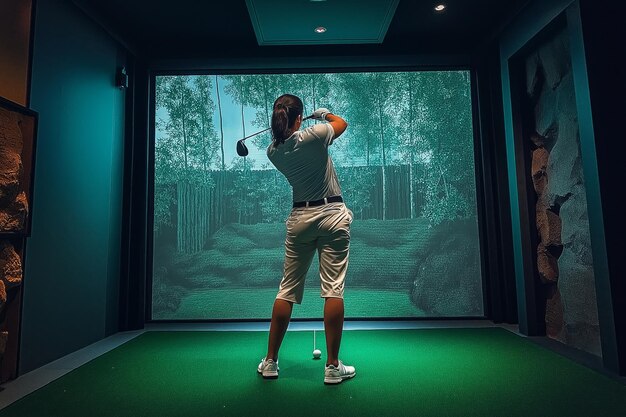
Where to Play Golf Indoors in Oklahoma City: Topgolf vs. Traditional Ranges
Golf in Oklahoma City means dealing with weather, daylight limits, and the geographic spread of courses across the metro area. Topgolf Oklahoma City changes that equation by moving the sport indoors, where climate and time of day become irrelevant. This guide covers what Topgolf delivers as a golf option, how it stacks against traditional range practice, and whether it fits into a serious golfer's training schedule or works better as social entertainment.
What Topgolf Is and How It Works
Topgolf is not a golf course. It's a tiered bay system where golfers hit into a netted range while a tracking camera and AI system record distance, accuracy, and spin on every shot. The bays are climate-controlled, equipped with golf clubs, and built into a entertainment venue that sells food and drinks. A golfer's phone or bay display shows real-time feedback on ball speed, launch angle, and where the ball landed relative to targets on the range.
The technology eliminates the need to walk downrange to retrieve balls or rely on a rangeman's eye. A golfer can hit 20 shots in 15 minutes and know the carry distance on each one. For players working on specific distances or swing changes, that feedback loop is faster than a traditional range visit.
Topgolf Oklahoma City: Location and Access
Topgolf Oklahoma City operates in a location serving the central metro area. The venue occupies a large bay structure with parking readily available. Hours run late into the evening most nights, which distinguishes it from many public courses that close at dusk. Pricing uses a bay-rental model rather than a per-bucket charge: a bay costs approximately $30 to $50 per hour depending on day and time, and one bay typically accommodates up to six golfers sharing the hourly cost.
That hourly model favors groups. A solo golfer paying $40 for an hour faces a higher effective cost per shot than a foursome splitting the bay, where the per-person cost drops to $10 per hour. Weekend rates run higher than weekday rates, and peak evening hours (after 5 p.m.) command premium pricing.
Information Gain: How Topgolf Compares to Oklahoma City Range Practice
Traditional driving ranges in the Oklahoma City area charge per bucket. A large bucket at a public range runs $12 to $18 and contains roughly 60 to 80 balls. That's about 20 to 30 cents per ball. At Topgolf, if four golfers split a $40 bay for an hour and each hits 60 balls, the cost is roughly 17 cents per ball, but only if all four stay the full hour.
The real trade-off is not price; it's speed of feedback and social flexibility. A range golfer walks at their own pace, hits 5 to 10 shots per club, and relies on their own eye or a rangeman's call to judge distance. A Topgolf golfer gets instant digital data but must book a bay and arrives at a set time. A range visit is more flexible; a Topgolf visit requires coordination.
For swing instruction, Topgolf's camera data provides specific metrics (ball speed, launch angle, spin rate) that some teaching professionals use to build swing plans. Traditional ranges offer more space to experiment with different stances and shot shapes because there's no camera constraint, but no instant metric feedback.
The climate difference matters seasonally. Oklahoma City's summer heat regularly exceeds 95 degrees Fahrenheit; Topgolf's air conditioning removes that variable. Winter ranges are windy and cold. For players in their 60s and beyond, or for golfers practicing during summer afternoons, Topgolf eliminates a real physical barrier to consistent practice.
Where Topgolf Fits Into Oklahoma City Golf Training
Topgolf works best for golfers with specific, measurable goals: holding a particular launch angle, hitting a target distance with consistency, or testing how swing changes affect ball flight. The technology is strongest for distance control work and weakest for shot shaping, because the camera tracks the ball's flight but a golfer cannot see the precise shot shape or curve as clearly as on a traditional range.
A course player who practices once a week for an hour gains meaningful data from one Topgolf session per month. A golfer preparing for a tournament or playing in a competitive league might rotate between Topgolf (for quantified feedback on specific clubs) and a traditional range (for volume, freedom of movement, and sight feedback).
Golfers in the Oklahoma City area who play courses in Edmond, Norman, or south toward Moore might use Topgolf as a weeknight option when darkness or schedule prevents a range visit. It trades the variety of outdoor range practice for convenience and data.
The Entertainment vs. Training Split
Topgolf's business model depends on food, drink, and social atmosphere as much as golf. The venue operates as a leisure destination where golf is one activity among several. This shapes the experience: a golfer arriving for focused practice shares bays and facilities with groups treating the outing as dinner and entertainment, not training.
For a solo golfer or a pair focused on swing work, early afternoon weekday slots offer the quietest, most focused environment. Weekend evenings attract a party-oriented crowd, and the wait times for bays extend; ambient noise rises; and the pace slows. A golfer hunting pure practice should avoid peak social hours.
Practical Takeaway
Topgolf Oklahoma City serves a specific need: quantified feedback on ball flight during hours and weather conditions when outdoor ranges are impractical or closed. It is not a replacement for course play or full-range practice volume. A golfer should use Topgolf to validate a specific change (launch angle, distance with a particular club) or to maintain swing rhythm during off-season or winter months. Expect to book in advance during evenings and weekends, and plan solo visits for afternoon weekdays when the environment supports concentration over entertainment.