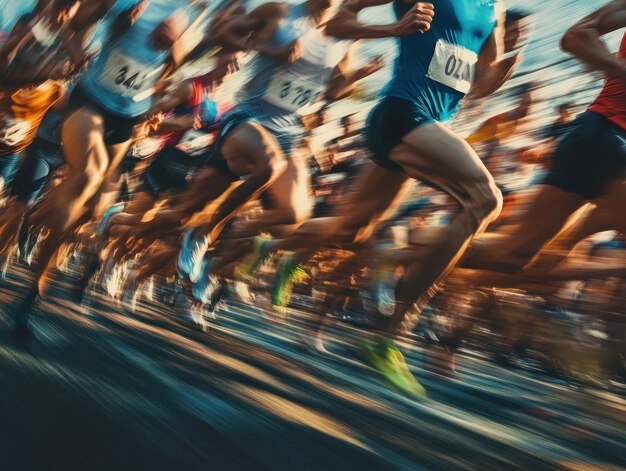
Running 26.2 Miles Through Oklahoma City: What the Marathon Route Reveals About the City
The Oklahoma City Marathon has shaped how residents and visitors understand the city's geography and character. This guide covers what makes the race operationally distinct, how the course uses the city's actual layout, and what running it teaches you about Oklahoma City that you won't learn from staying downtown.
The Course Design and What It Shows
The Oklahoma City Marathon runs 26.2 miles on a loop that begins and ends at Bricktown, the entertainment district along the Oklahoma River. The specific route moves north through Midtown, crosses into the northeast quadrant near the airport, then returns southwest through established neighborhoods before finishing downtown.
The route's engineering reveals the city's actual running infrastructure. Unlike marathons in densely packed metro areas, Oklahoma City's course relies on wide streets with consistent shoulder space and relatively low traffic volumes on race day. The northbound section uses boulevards designed for vehicle flow, which makes for fast splits but exposes runners to wind across open terrain. The southeastern leg passes through residential areas where tree coverage provides shade, making those miles substantially cooler in the morning hours.
The elevation profile is deceptively flat on paper but includes a series of smaller grades that accumulate. The most notable climb occurs between miles 18 and 22, heading back toward downtown. Runners expecting completely flat terrain often misread their pacing here.
Logistics and Timing Details
The Oklahoma City Marathon takes place annually in December. The specific date shifts yearly; verify the current year's date through the event organizer, as December scheduling means potential weather variability from mild to cold conditions. This differs markedly from spring marathons common in other regions.
The race starts early, typically at 7:00 a.m., to accommodate the full course within daylight hours and to manage course closure windows for vehicle traffic. Packet pickup operates the day before in downtown Oklahoma City, usually at a venue near Bricktown. Runners should plan to arrive 45 minutes earlier than stated pickup times, as lines build quickly on the final day before the race.
The entry fee runs approximately $150 to $180 depending on registration timing, with early registration discounts available up to several weeks before the event. This places it in the middle range for regional marathons; comparable events in Texas and Kansas fall within $20 of this price. Course entry for spectators is free, though parking near the route requires strategy.
Where Spectators Position Themselves
The Bricktown start and finish attract the largest crowds because the district has established gathering spaces and nearby parking. The stretch along Oklahoma River Boulevard offers sight lines for the opening and closing miles without vehicle traffic conflicts.
Midtown, particularly along NW 23rd Street between Western Avenue and Meridian Avenue, draws a secondary spectator presence. This neighborhood has sidewalk access, small businesses open on race day morning, and parking on residential streets. The crowd density here is noticeably lower than at Bricktown, which means spectators can actually see individual runners and take photos without fighting for position.
The northeast section of the course, beyond the I-235 corridor and toward Tulsa Avenue, sees minimal spectator presence. Runners pass through commercial and light industrial areas where gathering spots are limited. Families choosing to cheer should not plan to support someone at multiple points on this section.
Training and Course Preparation
Runners training for Oklahoma City's December marathon must account for Oklahoma's climate. Summer training peaks in July and August when heat and humidity reach peak levels, then taper into fall. December race conditions typically range from 45 to 65 degrees Fahrenheit at race time, which is a significant shift from peak training conditions. This means runners accustomed to heat have an advantage on race day, while those training in cooler climates should add specific heat-adapted long runs.
The actual course terrain differs from most local training routes. Oklahoma City's street grid and extensive northeast sprawl mean that long runs on residential loops and park circuits do not fully prepare the body for the specific repetitive impact of boulevard running. Training runs on NW 50th Street or NW 36th Street better simulate the actual course surface and wind exposure.
Local Running Context
The Oklahoma City running community treats the marathon as the marquee event of the year, but the landscape includes smaller races that serve as tuning opportunities. The city hosts half-marathons and 10-kilometer races throughout the year, concentrated in spring and fall. These events use shorter segments of the full marathon course, meaning runners can become familiar with specific miles without committing to full distance training.
The running store ecosystem in Oklahoma City centers on Midtown and the areas surrounding Bricktown. Specialty stores there offer gait analysis and course-specific advice. Staff at these locations typically train for the marathon themselves and can speak directly to pacing strategy and the actual difficulty of specific miles.
The Actual Competitive Context
The Oklahoma City Marathon draws between 8,000 and 10,000 finishers annually, making it a mid-size regional event. The field includes recreational runners, age-group competitors seeking qualifying times, and a smaller contingent of elite athletes. The competitive chase is real but not aggressive; runners are not jostling for position the way they would at major metropolitan marathons.
Age-group awards extend to the top three finishers in each five-year bracket, which is deeper than some marathons but shallower than others. A runner placing in the top 50 overall can reasonably expect a podium position within their age group, but placing in the overall top 10 requires genuine speed.
Practical Takeaway
Run the Oklahoma City Marathon as a test of your ability to execute on a course that respects your aerobic fitness but demands intelligent pacing through wind-exposed sections and the unexpected grade work in the final quadrant. Train on the actual streets where possible, account for the seasonal temperature shift from your peak training block, and position spectators where the course geography supports gathering, not where you assume crowds will appear. The course is fast enough to reward good preparation but forgiving enough to teach something if execution falters.