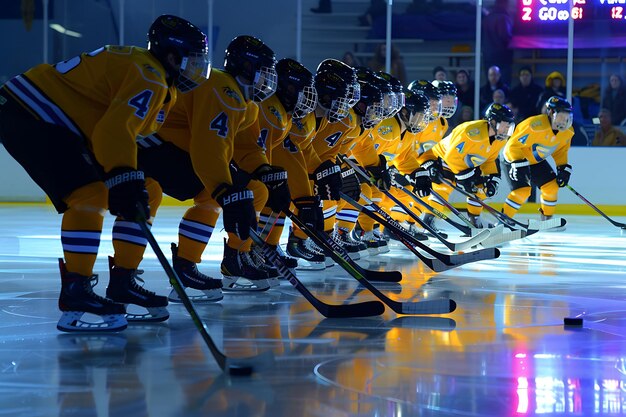
The Oklahoma City Barons and the AHL's Role in the City's Sports Identity
The Oklahoma City Barons operated as the American Hockey League affiliate for the Edmonton Oilers from 2010 until the franchise relocated to Bakersfield, California, in 2015. Understanding what the Barons represented during their five-year tenure requires examining both why professional hockey gained traction in a city better known for basketball and what their departure revealed about Oklahoma City's sports market.
Why Hockey Landed in Oklahoma City
The Barons filled a specific gap. The Oklahoma City Thunder had arrived in 2008, transforming the city into a major professional sports market almost overnight. Within two years, the metro area had grown confident enough to support a second professional team. The Barons played at the Cox Convention Center downtown, the same venue that hosts Thunder games during the season. This infrastructure advantage mattered: an existing arena with established event management, parking systems, and downtown foot traffic meant lower startup costs for the franchise.
The Barons' arrival also coincided with a deliberate effort by the city to diversify its sports identity beyond basketball. The Thunder dominated local sports conversation and media coverage, but they played only 41 home games per season. Hockey's 38-game home schedule, compressed into a tight winter slate, provided a secondary draw for fans seeking live sports on nights the Thunder weren't in town. For families in the metro area, the Barons offered a more affordable alternative to Thunder tickets during peak demand periods.
Attendance and the Market Reality
The Barons drew inconsistently during their five seasons. Best-case attendance reached around 5,000 fans per game; typical crowds settled closer to 3,000 to 4,000. By comparison, the Thunder routinely filled the same arena to near-capacity with 19,000 spectators. This gap was not unusual for an AHL team in a city without deep hockey tradition, but it exposed a fundamental limit: Oklahoma City's population base and climate created less natural demand for ice hockey than markets in the Upper Midwest or Northeast.
The franchise's location within the Thunder's shadow mattered more as the basketball team improved. Once the Thunder became a contending team in the Western Conference, competing for sports fans' attention and discretionary spending became harder for the Barons. A family choosing between a Thunder playoff push and regular-season hockey would choose basketball every time.
The AHL's Strategic Position
The Barons' existence illustrated what the AHL is: a development league where players move constantly. Rosters turned over multiple times per season as players were called up to Edmonton or sent down for conditioning. This meant no star power accumulated, no player became synonymous with the franchise, and fan investment remained transactional rather than emotional. A player a fan enjoyed watching might be gone within weeks. The league's business model prioritizes affiliation relationships and player development over local brand building.
This dynamic distinguished the Barons from the Thunder, whose core roster remained stable enough for fans to build attachment to specific players and develop long-term loyalty. The Barons asked fans to care about a team rather than a player or a story, and in a city where the Thunder narrative was already consuming sports media, that proved difficult to sustain.
The Broader Oklahoma City Sports Landscape
The Barons' collapse fit a recognizable pattern. Oklahoma City had successfully hosted minor league baseball, college sports, and the Thunder, but these successes had different foundations. The Oklahoma City Dodgers, a Triple-A baseball team, drew because baseball has deep cultural roots in the state and the schedule spans five months with 70 home games, creating sustained community presence. The University of Oklahoma football program's national profile created automatic regional interest. The Thunder benefited from NBA status, a marquee sport with global marketing power and the possibility of superstar acquisition.
The Barons occupied a narrower lane: a second-tier professional sport with no guaranteed stars, a compact season, and no obvious cultural traction in a region where college football and basketball already dominated sports conversation. The AHL requires patient fan bases willing to accept roster churn; Oklahoma City's sports fans had become accustomed to premium professional entertainment.
Why the Relocation Mattered Less Than Expected
When the Barons relocated to Bakersfield in 2015, the local sports reaction was muted. The Thunder remained the clear focal point of professional sports in the city. The Cox Convention Center continued hosting other events without disruption. The departure confirmed what five years of attendance data had suggested: professional hockey remained a niche offering in Oklahoma City rather than an essential part of the city's sports identity.
This was not a failure of marketing or arena quality. It was a reflection of market saturation. Oklahoma City had reached the capacity of its sports audience to support multiple professional franchises simultaneously, particularly when one franchise (the Thunder) demanded significant attention and spending. The metro area's population of approximately 1.4 million could sustain one major pro team comfortably; adding a second required either a much larger market or a sport with broader regional appeal.
The Practical Takeaway
For anyone evaluating Oklahoma City's sports options today, the Barons' history offers clear guidance: the city supports professional basketball at high levels and college sports enthusiastically, but has not demonstrated sustained appetite for professional hockey. This is not a reflection on quality of life or market sophistication. It reflects the reality that sports consumption is finite, dollars are finite, and the Thunder's arrival and success consumed the available capacity for professional sports interest. If professional hockey returns to Oklahoma City, it would require either a significant population increase, a change in the Thunder's status or schedule, or a shift in how the city allocates entertainment spending. Until one of those conditions changes, the market has spoken.