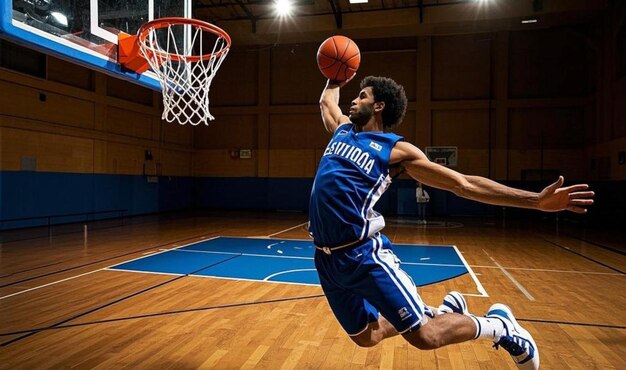
The Oklahoma City Thunder's Place in a Basketball City Built Around One Team
The Thunder are not Oklahoma City's sports team. They are Oklahoma City's reason for having a modern sports identity at all. Understanding the franchise means understanding how a mid-sized American city reorganized itself around NBA basketball after 2008, and what that commitment looks like on the ground today.
The Structural Reality of Thunder Fandom
Oklahoma City has no major league baseball, football, or hockey team. The Thunder arrived as a relocation from Seattle, filling a void created partly by circumstance and partly by choice. Unlike cities where multiple franchises compete for attention and resources, Oklahoma City built civic infrastructure almost entirely in service of one team's success. This creates a different fan experience than you'll find in markets like Dallas, Houston, or Denver, where basketball shares oxygen with other professional sports.
The Paycom Center, opened in 2002 as the Ford Center and home to the Thunder since 2008, sits in downtown Oklahoma City near Bricktown. The venue holds 20,049 for basketball and underwent a $1 billion renovation in 2023 that added suites, modernized seating, and expanded concourse space. Ticket availability varies dramatically with team performance. During the 2023-24 season, when the Thunder posted a 56-26 record and emerged as a genuine Western Conference contender, single-game ticket prices ranged from roughly $25 for upper-level seats against weaker opponents to $150 or more for matchups against the Lakers or Celtics. The team's improving roster has tightened inventory; games against bottom-tier teams now often sell out or approach capacity where they once left sections empty.
This is functionally different from evaluating a Thunder game as one option among five professional sports experiences. It is the professional sports experience in Oklahoma City.
What the Thunder's Development Path Reveals
The franchise's first five seasons (2008-2013) featured Kevin Durant, a generational scorer drafted second overall in 2007 who was already the team's centerpiece. Durant's presence transformed the Thunder from expansion curiosity into legitimate contender. The team reached the Finals in 2012 after an improbable run, losing to Miami in five games. Durant remained through the 2015-16 season before leaving for Golden State, a departure that reset the entire organization's timeline and altered how the city related to the team.
The post-Durant era, beginning 2016-17, revealed whether Oklahoma City's basketball infrastructure could sustain itself without a transcendent individual player. The answer was conditional. The Thunder rebuilt around guards and role flexibility, made the playoffs consistently, and maintained fan engagement despite lower star power. This matters because it shows that one-franchise cities develop different resilience. Without competing entertainment options, the team's performance directly govages whether the civic sports conversation exists at all.
By 2022-23, the Thunder shifted strategy again, acquiring younger assets and entering a measured rebuild. The 2023-24 season represented a turning point: a roster built around guards Shai Gilgeous-Alexander and Luguentz Dort, combined with strategic draft picks and development, produced a 56-win season and a second-round playoff exit. The trajectory suggested the team had moved beyond mere competence into contention territory.
Attendance and the Local Betting Effect
The Thunder typically rank in the top half of NBA attendance, though the numbers fluctuate more than they do in established multi-sport cities. The 2023-24 regular season average was approximately 18,500 per game, representing solid utilization of the Paycom Center's 20,049 capacity. Home games against elite teams (Lakers, Celtics, Nuggets) draw reliably. Games against Eastern Conference teams with limited local fan bases draw noticeably fewer. This creates visible variation in crowd energy and arena feel that is less common in cities where background sports consumption is higher.
Sportsbooks in Oklahoma have expanded availability of Thunder wagering following legalization in 2018. Draftkings and FanDuel operate in the state, and in-person betting is available at certain licensed venues. The Thunder's improved competitive standing in 2023-24 increased betting volume on their games measurably compared to the previous season, with point spreads reflecting local confidence in the roster more than national oddsmakers initially priced in.
Practice, Development, and the Youth Pipeline
The Thunder hold practice at the Thunder Dome, a facility adjacent to Paycom Center completed in 2011. The facility serves as the team's daily operational center and includes training, recovery, and administrative infrastructure. Unlike some NBA cities where the practice facility is miles from the arena, the Thunder's setup keeps operations centralized in downtown.
This geographic concentration has spillover effects. Young players develop in Oklahoma City with fewer competing distractions than they might in larger markets. The team's success in developing drafted talent (particularly later-round picks and undrafted players) suggests the environment supports extended player development. Gilgeous-Alexander's arrival in 2019 accelerated the franchise's timeline, but the infrastructure for player development was already in place.
What Attending a Game Requires vs. Provides
A Thunder home game offers a predictable formula: game starts at 7:30 p.m. or 8:00 p.m. central time on most nights, with occasional matinees. Parking around Paycom Center costs $10 to $15 depending on lot and game tier. Concessions follow NBA standard pricing: $18 to $22 for beer, $5 to $8 for bottled water, $12 to $16 for basic food items. The arena is modern and functional, recently upgraded, but smaller and less ornate than venues in markets like Phoenix, Denver, or San Antonio.
What distinguishes a Thunder game is the absence of a second team to root for later that evening or year-round. The experience is not comparative. It is concentrated.
The Path Forward
The Thunder's 2023-24 improvement to 56 wins established them as legitimate conference contenders rather than perpetual retoolers. For a city built around a single franchise, this development means the next season will determine whether the infrastructure continues to expand or plateau. If the roster continues adding complementary talent and Gilgeous-Alexander plays at his ceiling, playoff tickets will likely approach $200 for later rounds. If the team regresses, pricing reverts and the civic energy recalibrates downward.
This dynamic is specific to one-team markets. Oklahoma City has learned to invest entirely in Thunder success because there is nowhere else to invest. Understanding that framework is the beginning of understanding the franchise's place in the city.