Walmart Supercenter at Northwest Expressway: What to Expect and Where It Fits in Oklahoma City Grocery Shopping
The Walmart Supercenter on Northwest Expressway (44th Street) serves the northwest corridor of Oklahoma City as a one-stop format store combining grocery, general merchandise, and pharmacy services. This guide covers what distinguishes this location within Oklahoma City's retail landscape, practical shopping conditions, and how it compares to alternative grocery and discount retail options across the metro area.
Location and Service Area
The Northwest Expressway Supercenter operates in a part of Oklahoma City that includes residential neighborhoods north of the city center and extends toward Edmond. The store sits on a highway corridor that makes it accessible from I-44 and residential areas along North MacArthur Boulevard and North May Avenue. For shoppers in Nichols Hills, Edmond, or northwest OKC proper, this location typically involves less travel time than the Supercenter locations on the south side or near Tinker Air Force Base.
Parking is surface lot only (no parking garage), which means weather exposure during summer months and evening visibility during winter. The lot does not restrict overnight parking formally, though the store's hours end at 11 p.m. most nights.
Grocery Selection and Pricing Structure
Supercenter format stores stock groceries at lower per-unit prices than traditional supermarkets because Walmart's model relies on high volume and limited selection within each category. The Northwest Expressway location carries approximately 4,000 grocery stockkeeping units, compared to 15,000 or more at a full-service supermarket like Homeland or Reasor's. This trade-off means you will find major brands and store-label Great Value alternatives, but limited organic, specialty, or regional product depth.
Produce quality varies seasonally; peak availability (spring and summer) brings better condition and selection. Meat cuts are basic (ground beef, chicken breasts, pork chops, standard steaks), and the butcher counter does not custom-cut. Store-brand dairy and eggs undercut national brands by 15 to 25 percent. Frozen and shelf-stable goods are priced competitively; a basket of 20 mixed grocery items will typically cost 8 to 12 percent less than at a traditional supermarket, though this advantage narrows on loss-leader sales items.
The pharmacy operates on standard Walmart hours (same as the store, closed Sundays before 10 a.m.) and fills prescriptions from most insurance plans. Wait times average 15 to 20 minutes; adding a new prescription may extend this to 30 to 45 minutes during morning and early afternoon rushes.
General Merchandise and Apparel
Non-grocery departments occupy roughly 60 percent of the sales floor. Apparel is basics only (t-shirts, jeans, basic activewear, children's clothes); this is not a destination for brand-name fashion or trend-driven shopping. Home goods include bedding, kitchen gadgets, small appliances, and seasonal décor; selection is standard Supercenter inventory with no location-specific customization. Electronics cover televisions, laptops, tablets, and smart home devices at prices aligned with Best Buy's regular (non-sale) pricing, meaning Supercenter pricing rarely beats specialized retailers on new-release items.
The auto service bay offers oil changes, tire mounting, batteries, and basic maintenance; appointments are not required, but walk-in wait times frequently exceed an hour during midweek mornings and Saturday afternoons.
Staffing and Checkout Experience
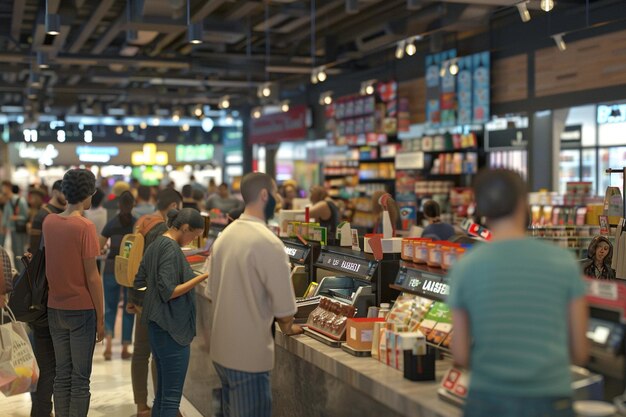
The Northwest Expressway location staffs approximately 300 employees across all departments. Self-checkout stations number eight to ten, with two to four staffed lanes typically open during peak hours (7 to 9 a.m., 12 to 1 p.m., 5 to 7 p.m.). During off-peak hours (midday, late evening), only self-checkout or one staffed lane may be active. Average checkout time at self-service is 10 to 15 minutes for a standard basket; using a staffed register during peak hours typically adds 5 to 10 minutes of waiting.
Customer service and returns operate at the front of the store; return windows close 30 minutes before store closing. Most merchandise carries a 90-day return window with receipt; groceries are non-returnable except for quality defects.
Comparison to Other Oklahoma City Grocery and Discount Options
Supercenter vs. Traditional Supermarkets. Reasor's and Homeland locations throughout OKC maintain wider produce selection, better meat counter customization, and more regional/organic products. However, a typical grocery trip at either chain runs 12 to 18 percent higher in total spend. Shoppers willing to limit choices save materially at Walmart; shoppers prioritizing selection and customization pay a premium elsewhere.
Supercenter vs. Walmart Neighborhood Markets. Walmart operates two Neighborhood Market format stores in Oklahoma City (one near Bricktown, one near Quail Springs). These are smaller-footprint, grocery-focused stores without the full general merchandise department. They stock 7,000 to 10,000 grocery items and appeal to shoppers seeking slightly better produce selection than a Supercenter without driving to a traditional supermarket. The Northwest Expressway Supercenter offers broader non-food shopping if you combine trips.
Supercenter vs. Target. Target's Oklahoma City locations (Midtown, south OKC near I-35) emphasize apparel, home décor, and seasonal goods over grocery. Target's grocery selection is intentionally limited (approximately 1,500 items) and priced higher per unit. Target is not a grocery destination; Supercenter is. For non-food shopping alone, Target's assortment in apparel and home goods is deeper.
Supercenter vs. Costco. Costco operates one location in Oklahoma City (near Quail Springs). Costco requires a paid membership ($65 to $130 annually), stocks approximately 3,500 items (far fewer than Supercenter), and targets bulk purchase and higher household income. Per-unit prices on bulk staples (flour, rice, canned goods, frozen protein) undercut Supercenter; regular-quantity purchases at Costco are priced higher. Costco has no pharmacy or apparel. Supercenter appeals to single-item and small-quantity shoppers; Costco to bulk-purchase households.
Practical Considerations for This Location
The Northwest Expressway Supercenter operates 6 a.m. to 11 p.m. Monday through Saturday, and 7 a.m. to 10 p.m. Sunday. This schedule aligns with most retail traffic but closes earlier than some 24-hour locations Walmart operated in prior years. If you shop after 10 p.m. on weekends, plan accordingly.
Fuel pricing is available at the adjacent Walmart fuel station (separate from the store entrance); Supercenter fuel typically tracks 3 to 8 cents below local average prices due to Walmart's buying power. Fuel rewards are available through the Walmart app.
Stocking and shelf rotation occur primarily overnight and early morning. Mid-afternoon (1 to 4 p.m.) typically shows picked-over seasonal and promotional items; early morning or early evening restocking cycles provide fresher displays.
The Northwest Expressway location handles moderate to heavy foot traffic year-round due to proximity to residential density and highway access. This makes it less convenient than quieter suburban or edge-of-town Supercenters for time-sensitive shopping, but also means stock replenishment is more frequent, reducing out-of-stock frustration.
Bottom Line
The Northwest Expressway Walmart Supercenter is economically efficient for combined grocery and general merchandise shopping, with competitive pricing against traditional supermarkets but tighter selection. It makes sense for shoppers prioritizing price and convenience over product range, and for those already in the northwest OKC or north metro area. It is not a specialized grocery destination; it is a volume-based discount operation serving basic household needs.