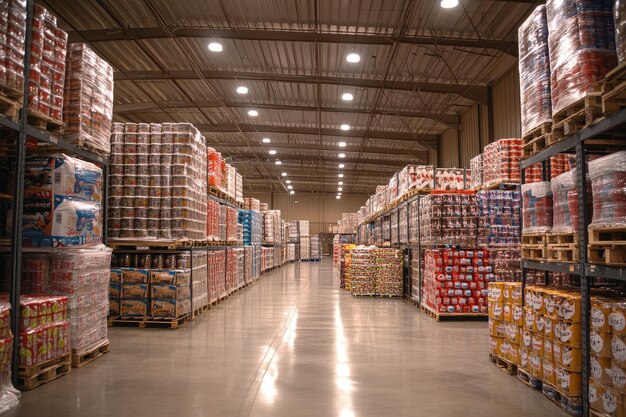
Wholesale Food Sourcing for Oklahoma City Restaurants and Institutions
US Foods operates a distribution center serving the Oklahoma City food service market, and understanding how wholesale food suppliers fit into the local retail and restaurant supply chain matters if you're opening a food business, managing an institutional kitchen, or sourcing ingredients at scale.
This guide covers what wholesale food distribution means in Oklahoma City's context, how US Foods functions within the competitive landscape, and what alternatives exist depending on your volume and product needs.
How Wholesale Food Distribution Works in Oklahoma City
Wholesale food suppliers like US Foods operate on a fundamentally different model than grocery retailers. They sell bulk quantities to restaurants, catering operations, schools, hospitals, and other food service operations, not to individual consumers. Pricing reflects volume discounts and is quoted per case or pound rather than per unit. Minimum orders typically apply, though these vary by supplier and account type.
In Oklahoma City, food service businesses have historically relied on regional and national distributors because local production capacity is limited. The metro area's restaurant and catering sector has grown significantly since 2015, creating steady demand for reliable supply chains. This growth is why multiple distributors maintain operations here rather than serving the market from Dallas or Kansas City alone.
US Foods in the Oklahoma City Market
US Foods maintains a facility in the Oklahoma City area that supplies food service accounts across central Oklahoma. The company operates on a net pricing model, meaning prices fluctuate based on commodity costs and contract terms rather than fixed retail markups. Most accounts require a credit application and minimum order thresholds, typically starting at $500 to $1,000 per delivery depending on the product category.
Delivery frequency varies. Some accounts receive twice-weekly deliveries; others arrange weekly pickups or less frequent large orders. The Oklahoma City location can generally fill orders for delivery within 2 to 3 business days for standard items, though specialty or frozen products may have longer lead times.
Product range spans proteins (fresh, frozen, and processed meats), produce, dairy, dry goods, frozen prepared foods, and institutional supplies like smallwares and chemicals. The inventory depth reflects the distributor's national scale, which means access to products not stocked by local restaurant supply shops. However, this also means pricing is competitive only at volume thresholds most small operations don't reach initially.
Competitive Alternatives for Oklahoma City Food Service Operations
Sysco operates a parallel distribution network in Oklahoma City with similar breadth and comparable pricing structure to US Foods. The choice between Sysco and US Foods often comes down to account relationships and delivery schedules rather than meaningful cost differences. Both companies employ sales representatives who negotiate contract pricing individually, so comparing quotes directly is necessary rather than assuming published rates apply.
Local restaurant supply shops like those in Midtown and near the Stockyard District operate on smaller margins and faster reorder cycles. These are used by chefs and kitchen managers for same-day or next-day needs, specialty items (imported cheeses, ethnic produce), and smaller quantities that don't justify wholesale minimums. Prices per unit are higher than national wholesalers but the flexibility and immediacy have value for menu adjustments mid-week.
Cash-and-carry operations, including Gordon Food Service (GFS) locations within reasonable distance of Oklahoma City, allow food service businesses to shop without credit accounts or minimum orders. You pay retail-equivalent prices but buy at volume and transport yourself. This model works for small caterers or restaurants doing inventory checks rather than relying solely on distributor deliveries.
Direct farm sourcing through Oklahoma producers and regional cooperatives has expanded since 2018. Operations like Farmer & Rancher Direct and local farm networks supply seasonal produce, grass-fed beef, and dairy directly to restaurants that commit to regular orders. Pricing is often lower than national distributor premium lines, but availability is seasonal and quantities must align with farm capacity.
Specialty distributors for Asian groceries, Latin American products, or organic certified items operate independently in Oklahoma City and serve niche markets poorly served by national wholesalers. These exist primarily for restaurants with themed menus or specific culinary requirements.
Volume Thresholds and When Each Option Makes Sense
A food truck or small catering operation moving less than $3,000 monthly in food costs will pay less through local suppliers or cash-and-carry operations despite higher per-unit prices because wholesale minimums and account requirements don't apply.
A restaurant doing $15,000 to $25,000 monthly in food cost breaks even or gains modest savings with US Foods or Sysco, provided the account is large enough to qualify for volume pricing. At this level, two-week price comparisons between your distributor and competitors become worthwhile.
Institutional operations (schools, universities, hospitals, corporate cafeterias) serving 500+ meals daily benefit substantially from national distributor economies of scale, especially on commodity proteins and dairy. Institutions in the Oklahoma City metro routinely contract with US Foods or Sysco at prices 15 to 25 percent below what a 100-seat restaurant pays for equivalent products.
Logistics Considerations in Oklahoma City
The Oklahoma City metro's sprawl creates variation in delivery lead times. Accounts in Edmond or Norman may experience longer waiting periods than downtown or Bricktown locations. Some distributors offer smaller delivery fees for consolidated orders across nearby restaurants, reducing per-stop cost.
Weather, particularly ice storms, periodically disrupts distribution schedules. Restaurants and institutions relying on just-in-time inventory from a single distributor face shortages during winter disruptions. Building redundancy with a secondary supplier or local backup source is standard practice for food service operations that cannot absorb inventory breaks.
Practical Starting Point
If you're establishing a food service operation in Oklahoma City, contact US Foods and Sysco directly to request quotes and discuss minimum order requirements for your projected volume. Ask specifically about delivery day and frequency flexibility, not just pricing. Compare one week of actual orders against their minimums. For operations under $5,000 monthly food cost, investigate cash-and-carry and local suppliers first, as the flexibility often outweighs wholesale pricing. Larger operations should negotiate directly rather than relying on published rates; distributor pricing is individually contracted and substantial savings are possible with volume commitments.