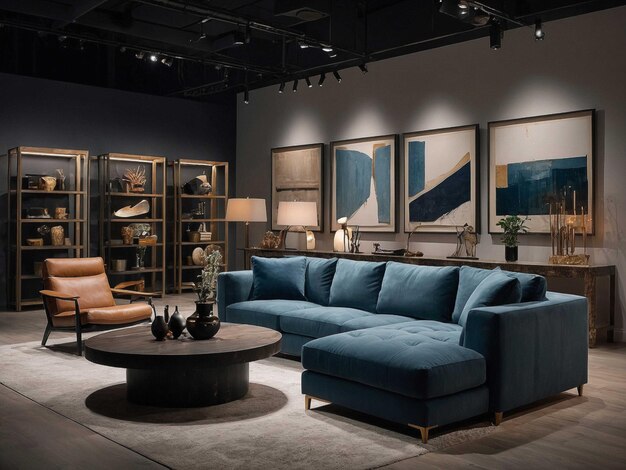
Where to Buy Suburban Contemporary Furniture in Oklahoma City
Contemporary furniture with clean lines and minimal ornamentation has become the default aesthetic for Oklahoma City households moving away from traditional Southern styling. This guide covers where suburban homeowners can source mid-range to higher-end pieces without driving to Dallas or Kansas City, what price expectations differ by retailer, and how Oklahoma City's retail geography affects both selection and delivery timelines.
The Retail Landscape: Midtown, Automobile Alley, and Suburban Corridors
Oklahoma City's furniture retail splits into three distinct zones, each serving different shopping behaviors.
Midtown and Automobile Alley concentrate design-forward independents and smaller showrooms where designers work directly with customers. These areas draw people hunting for custom upholstery or vintage-contemporary hybrids. Traffic is weekend-heavy, and parking is street-level.
The northwest corridor along Hefner Parkway and the retail clusters near Quail Springs Mall host national chains with larger floor displays and consistent inventory. Selection here runs broader but less curated. This zone serves buyers prioritizing immediate availability and simplified return policies.
South Oklahoma City along I-35 and east toward Midwest City contains value-oriented furniture warehouses and outlet-adjacent showrooms. Delivery is faster from these locations because stock turns over quickly, but customization options are limited.
Understanding Price and Lead Time Differences
Suburban contemporary pieces in Oklahoma City carry distinct price structures by retailer type.
National chains with locations near Quail Springs typically stock sofas, sectionals, and dining tables in the $800–$2,200 range for entry contemporary lines. These retailers (Rooms to Go, Art Van locations if operational in the metro area) often advertise same-week delivery for in-stock upholstery, though "same-week" usually means 5 to 7 business days. Floor models move quickly during sales events.
Local custom upholstery shops in Midtown and surrounding areas charge $1,400–$4,500 for comparable pieces because labor and fabric selection are built into the quote. Lead time runs 8 to 12 weeks. This approach makes sense for buyers seeking specific fabric durability, leg finishes, or arm styles not available from stock.
Warehouse and outlet retailers along I-35 undercut national chains by 15 to 25 percent on the same manufacturer lines, but selection rotates monthly. A sofa priced at $1,600 at a national showroom might be $1,200 here, with delivery in 3 to 4 weeks. The trade-off: you cannot special-order fabric if the warehouse does not stock it.
Key Neighborhoods and What They Offer
Midtown has become Oklahoma City's design district. Independent furniture stores here stock contemporary pieces alongside art, lighting, and accessories. These retailers know their manufacturers' lead times precisely and can tell you whether a leg finish or cushion upgrade adds two weeks or two months. Owner-operators often negotiate on custom orders under $3,000. Street parking fills quickly on Saturdays.
The Automobile Alley district (roughly NE 1st to NE 4th Street, between Robinson and Skirvin) houses some showrooms that split furniture with industrial décor or commercial office pieces. Contemporary styling here skews toward minimalist desks, modular shelving, and slim-profile media consoles. Useful if your suburban home office demands something beyond big-box options.
Quail Springs area retail concentrates major chains and franchises. Delivery estimates here are most standardized because multiple retailers source from the same distribution centers. Comparing prices between two stores within this zone typically yields the lowest overall cost for identical SKUs.
What "Suburban Contemporary" Actually Means in the Oklahoma Market
Contemporary suburban furniture in Oklahoma City typically means pieces with tapered wooden legs (usually oak or walnut), low-profile arms, neutral upholstery (gray, cream, tan), and minimal decorative trim. Buyers here often pair these pieces with geometric throw pillows, live-edge wood coffee tables, and metal-frame shelving to complete the look.
This aesthetic dominates because it works in homes built in the 1980s through 2010s, which make up a large percentage of suburban Oklahoma City housing. The furniture reads as modern without feeling trendy, and it coordinates with resale fixtures common in the metro area.
Sectionals dominate sales over traditional sofas. L-shaped and U-shaped sectionals start around $900 for entry-level stock pieces and reach $3,500 for custom configurations. Dining tables with natural wood tops and metal or wood bases run $600–$2,000. Storage benches and media consoles, popular for smaller suburban lots, price between $400 and $1,200.
Selection Gaps and What You Cannot Find Locally
True mid-century modern reproduction (hairpin legs, tapered cone legs, authentic Eames-style chairs) requires shopping outside Oklahoma City. Local retailers stock "inspired by" versions, not vintage or licensed reproductions. If you want a specific Hans Wegner or Charles and Ray Eames piece, you are buying secondhand from online marketplaces or specialty shops in larger metros.
Sustainably sourced or FSC-certified contemporary furniture is sparse in Oklahoma City's retail footprint. One or two Midtown retailers stock European brands with environmental certifications, but expect 30 to 40 percent premiums and 10 to 14-week lead times.
Timing Your Purchase: Sales Cycles and Inventory Reality
Oklahoma City furniture retailers follow national sales calendars: Presidents' Day (February), Memorial Day (May), Fourth of July, Labor Day (September), Black Friday (November), and end-of-year clearance (December). During these windows, mark-downs on floor models and last-season fabric runs reach 20 to 35 percent.
Inventory clears most aggressively in September and December. If a retailer has three display sofas on the floor and one matches your specifications, you can negotiate closer to clearance pricing even outside formal sales periods. Sales associates know this; asking directly about floor-model pricing costs nothing.
Practical Next Steps
Visit one national chain showroom (to baseline prices and delivery expectations) and one local custom shop (to understand the customization cost difference). Get written delivery estimates from each. The gap between their timelines will tell you whether waiting eight weeks for customization matters for your timeline. Photograph any piece you seriously consider, and verify the dimensions on the tag match your space's actual measurements before committing. Contemporary pieces often look larger on showroom floors than in residential living rooms.