Where to Eat Steak in Oklahoma City: A Breakdown by Style and Neighborhood
Oklahoma City's steak restaurants cluster into distinct categories: old-guard steakhouses with tableside service and wine programs; newer venues focused on quality beef and minimal preparation; and casual spots where the meat matters more than the room. This guide covers what separates them, where to find them, and what trade-offs each requires.
The Traditional Steakhouse Model
Cattlemen's Steakhouse in Anadarko, about 50 miles southwest of downtown Oklahoma City, operates as the category anchor. It has served beef continuously since 1910 and remains the reference point for the steakhouse-as-institution model in the region. The restaurant maintains a formal dining room, a wine list with depth beyond Oklahoma norms, and tableside preparations. Prices run $35 to $65 for entrees, consistent with steakhouse pricing in the South, though Cattlemen's occupies a semi-rural setting rather than an urban financial district.
Within Oklahoma City proper, the steakhouse experience scales differently. Venues in the Bricktown district and downtown core typically position themselves as business-dinner destinations or special-occasion rooms. These restaurants generally offer USDA Prime beef, aged in-house, with standard preparations (filet mignon, New York strip, ribeye) and sauces on the side. Wine lists run 100 to 200 selections. Entrees cost $40 to $80. The overhead of downtown location and formal staffing structure pushes prices higher than Cattlemen's, but the experience trades rural authenticity for urban convenience and menu breadth.
Steakhouse-Caliber Beef Without Ceremony
A smaller category has emerged in Oklahoma City: restaurants that source high-grade beef but operate in casual settings. These venues typically occupy warehouse spaces or converted retail locations, reduce overhead through streamlined service, and price steaks $28 to $50. The beef itself meets the same quality threshold as formal steakhouses. The difference is environment: open kitchens instead of hidden ones, communal tables or minimalist seating, and no elaborate sides program.
This model appeals to diners who want Prime or dry-aged beef but not the cost structure or social formality of traditional steakhouse dining. The trade-off is shorter wine lists (often 30 to 50 selections), less flexibility in portion size, and no tableside work. If you want to eat steak in Oklahoma City without reservation protocol or business-casual dress, this category offers the clearest path.
Beef Quality Variations Across Venues
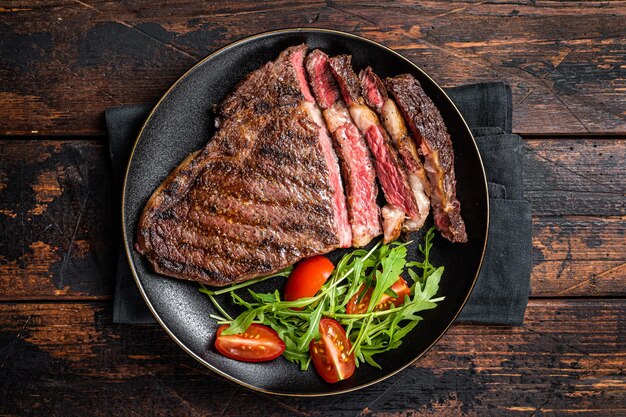
USDA Prime beef, the standard in established Oklahoma City steakhouses, represents the top 2 percent of cattle graded by the USDA. Prime beef commands wholesale prices 20 to 30 percent above Choice, the next grade down, which most casual restaurants use. The difference is visible: Prime beef has more intramuscular fat (marbling), which increases flavor and tenderness during cooking.
Dry-aging, a secondary variable, requires dedicated refrigeration and time. Beef aged 28 to 35 days in humidity-controlled environments loses moisture, concentrating flavor and creating a distinctive crust. Dry-aged ribeyes and New York strips carry a pronounced umami character absent from fresh beef. Cost is steep: dry-aged steaks run $10 to $20 more per pound than wet-aged equivalents. In Oklahoma City, only a subset of steakhouses maintain dry-aging programs. If dry-aged beef is your priority, confirm this before reserving; it is not standard.
Source matters less in Oklahoma City than in coastal markets. The state has substantial cattle ranching operations (Oklahoma ranks fourth nationally in beef cattle), but most steakhouses source USDA Prime beef through national distributors rather than local ranches. A few newer venues highlight regional beef, but this is not yet a defining trend in Oklahoma City steakhouse dining.
Neighborhood and Timing Considerations
Bricktown, the historic warehouse district south of downtown, concentrates several steakhouse options within walking distance of one another. This neighborhood is useful if you want to combine dinner with the Bricktown Canal area or overnight accommodations. Parking is public lot-based rather than dedicated restaurant parking.
Downtown Oklahoma City, anchored by the Myriad Gardens and the Devon Energy Center, hosts steakhouses positioned toward business travelers and hotel guests. These restaurants have formal reservations systems and often fill during weekday lunch and dinner service. Weekend availability is typically easier, and prices may drop $5 to $15 per entree on Thursday through Sunday, depending on the venue's business model.
The Uptown district, northwest of downtown, has fewer steakhouse-specific venues but overlaps with higher-end dining overall. Restaurants here tend to run smaller (50 to 80 seats rather than 150 to 200) and price themselves slightly below downtown peers for the same quality beef.
Practical Details for Planning
Most Oklahoma City steakhouses enforce business-casual dress codes (no athletic wear or open-toe footwear). This is not enforced loosely; if you are uncertain, contact the restaurant. Reservations are necessary for dinner Thursday through Saturday and recommended for most venues on other nights. Many accept reservations only by phone or their own websites, not through third-party apps.
Parking varies: Bricktown and downtown offer street and lot parking; expect to pay $5 to $10 for lots. Most steakhouses will validate or reimburse parking if asked at the host stand.
Wine pricing at formal steakhouses typically runs 2.5 to 3 times wholesale cost, standard for full-service restaurants but higher than casual venues. A $30 bottle wholesale costs $75 to $90 on the list. This is a known markup; do not expect steakhouse wine pricing to mirror retail. Casual steakhouses often run lower markups and have smaller lists, which can make wine selection both cheaper and faster.
Many Oklahoma City steakhouses offer early-dining discounts between 5 and 6 p.m., sometimes $10 to $20 off entrees. This is worth asking about if flexibility exists in your timing.
The Takeaway
Choose by setting first: formal steakhouse if the occasion requires ceremony and wine depth; casual beef-focused venues if you want quality meat without overhead cost or dress code; Cattlemen's in Anadarko if you prioritize history and regional identity over location. Confirm dry-aging and wine list size when calling ahead. Expect to spend $50 to $150 per person before drinks at formal steakhouses, $35 to $65 at casual beef places, depending on portion and sides.