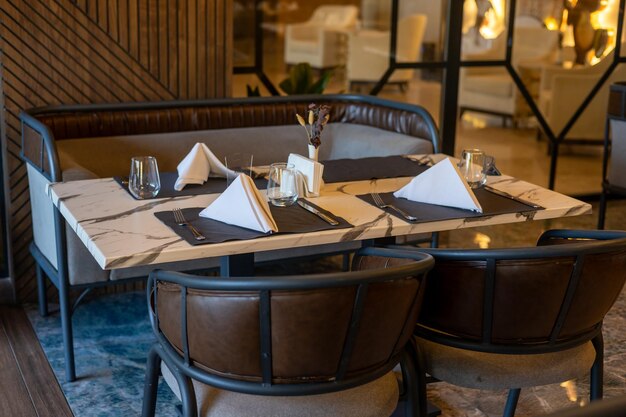
What Red Prime Steakhouse Reveals About Oklahoma City's Upscale Dining Trajectory
Red Prime steakhouse in Oklahoma City occupies a specific position in the city's restaurant hierarchy: a high-end protein-focused establishment that reflects how the local fine dining market has matured over the past decade. Understanding Red Prime's place and performance tells you something concrete about where Oklahoma City diners are willing to spend, what they expect at that price point, and how the city's restaurant scene has shifted from aspirational to competitive.
The Steakhouse Category in Oklahoma City
Oklahoma City's steakhouse market divides into distinct tiers. At the top sit establishments charging $45 to $75 for prime cuts, expecting tableside service and wine programs that justify those prices. Red Prime enters this conversation as a full-service steakhouse with expectations around cost and experience that separate it from neighborhood bistros or mid-range chains. This matters because Oklahoma City did not have reliable high-tier steakhouses for many years. The market was either casual dining or closed. Red Prime's existence and longevity signal that enough local wealth and visitor traffic now supports premium steak service.
The steakhouse format itself constrains what Red Prime can offer and what customers should expect. Unlike contemporary restaurants that build menus around seasonal produce and technique innovation, steakhouses operate within a narrower brief: aged beef, traditional sides, wine service, and professional pacing. This is not a limitation but a category requirement. A reader evaluating Red Prime should understand that the menu will not surprise; it will execute fundamentals reliably or it will fail.
Specific Details About Red Prime
Red Prime is located in Bricktown, Oklahoma City's entertainment district centered around a network of canal-adjacent blocks between Main Street and the MCI Center. Bricktown dining tends toward casual or mid-range (pizza, barbecue, chains), so a formal steakhouse in that neighborhood represents a deliberate positioning choice. It places Red Prime within walking distance of entertainment venues and hotels, making it accessible for out-of-town visitors and date-night diners from elsewhere in the metropolitan area.
The restaurant operates with a full bar, which is material to steakhouse economics and experience. The mark-up on wine and spirits directly funds service staff, kitchen skill, and the ability to hold inventory. Red Prime's pricing reflects this structure. Entrees typically start at the $45 range for secondary cuts and run to $70 plus for dry-aged premium selections. A cocktail runs $12 to $16. This is not inexpensive, and the reader should calibrate expectations accordingly. You are not paying for novelty or chef celebrity; you are paying for execution of familiar standards and the overhead required to staff and maintain that service level.
Red Prime's hours follow Bricktown rhythms: closed Sundays and Mondays, open Tuesday through Saturday for dinner service. This schedule is standard for upscale steakhouses in secondary markets, where lunch traffic and weekend brunch do not generate sufficient volume. It also means the restaurant is not a casual weeknight destination; it requires planning.
How Red Prime Fits the Broader Oklahoma City Market
Oklahoma City's restaurant growth has concentrated in three areas: Bricktown (entertainment and tourism), Midtown (young professionals and creative workers), and areas near Nichols Hills (wealth and established residents). Red Prime's Bricktown location serves the first constituency and draws from the third. Midtown has generally attracted less formal dining: ramen shops, taquerias, pizza, ambitious smaller plates. This geographic split reflects customer expectation. Visitors and affluent diners seeking traditional fine dining go to Bricktown. Younger and more experimental diners go to Midtown.
The presence of Red Prime also matters in context. Oklahoma City had historically exported fine dining ambitions: serious diners would drive to Dallas or Kansas City for certain experiences. The growth of Red Prime and similar establishments (including other steakhouses, French-influenced restaurants, and tasting-menu concepts in Bricktown and surrounding areas) indicates that the city now retains enough disposable income and cultural capital to support these venues locally. The fact that they cluster in specific neighborhoods and maintain limited hours means the market is still finite compared to larger metros, but it is functional and growing.
Practical Considerations for Visiting
If you are evaluating Red Prime against other dinner options in Oklahoma City, the trade-off is clarity: you know what you are getting. There is no surprise menu, no kitchen pursuing novelty, no experimental plating. You are choosing whether that consistency justifies the price and whether the specific execution (temperature, seasoning, sauce balance) meets standards you have set. This is a legitimate choice and not a deficiency; many diners prefer this clarity to the risk of ambitious experimentation.
Reservations are strongly advised, particularly on Friday and Saturday. Bricktown absorbs tourist traffic and weekend demand in ways that can overwhelm walk-in capacity at full-service restaurants. The restaurant's website or a phone call to confirm current hours and reservation policy is necessary, as operating hours can shift seasonally.
The wine program is worth considering. Red Prime maintains a list scaled to steakhouse pairing: Cabernet Sauvignon, Merlot, and similar cuts of red wine dominate. If you are interested in exploring wine lists as part of your dining decision, Red Prime's approach is conservative and by-the-book. This is not a liability; it means the sommelier or server can confidently recommend pairings without pretense. The cost of wine reflects Bricktown positioning and the restaurant's general price tier, so expect mark-ups in the range of other upscale establishments, not retail pricing.
The Larger Point
Red Prime's viability signals that Oklahoma City's restaurant market has reached a point where high-overhead, limited-menu fine dining can operate profitably. This does not mean the city has unlimited fine dining options (it does not), and it does not mean every format or cuisine reaches that tier (it does not). But it means that if you are seeking high-end steak service, consistency, and professional service in Oklahoma City, you no longer need to leave the city. Red Prime is part of that infrastructure, and its presence is worth noting as evidence of market maturation.