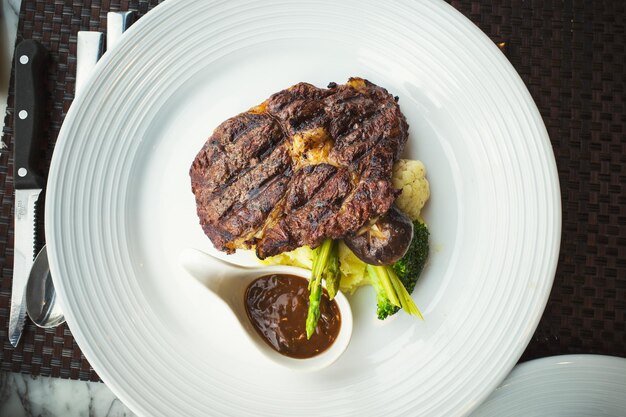
Where to Find a Proper Steak in Oklahoma City
Oklahoma City's steak culture runs deep, rooted in the state's ranching heritage and cattle industry. If you're looking for a steakhouse experience in the city, you're choosing from a landscape shaped by two competing approaches: establishments that lean into Oklahoma's cowboy identity and those that position themselves as upscale urban steakhouses with national ambitions. This guide covers what actually distinguishes steakhouses operating in Oklahoma City, how they differ in execution and price, and how to choose based on what you're after.
The Market Structure
Oklahoma City steakhouses operate across three distinct tiers. At the top end, you'll find fine dining establishments that source premium beef, maintain extensive wine programs, and price entrees in the $40 to $65 range. The middle tier includes solid neighborhood and downtown steakhouses with competent kitchens, dinner entrees between $22 and $40, and a mix of local and regional clientele. The lower tier covers casual spots and barbecue houses that serve steak but don't center their identity around it.
The city's steakhouse geography clusters downtown and near Bricktown, with secondary concentrations in Uptown/Midtown and along restaurant rows in neighborhoods like Edmond and Norman. This matters because steakhouses are destination restaurants; location affects parking ease, walkability, and whether you're combining dinner with other activities.
What Sets Oklahoma City Steakhouses Apart
Most steakhouses in the United States follow a template: aged beef, butter-heavy sides, classic cocktails. Oklahoma City's steakhouses do this, but several operate with an explicit Oklahoma angle. They emphasize regional cattle, partner with Oklahoma ranches for beef sourcing, or build their narrative around the state's ranching history. This isn't marketing artifice; it affects sourcing decisions, relationships with suppliers, and sometimes menu design.
A practical distinction: steakhouses that source primarily from Oklahoma or regional ranches often charge 15 to 25 percent less than those importing higher-grade beef from larger national distributors. You're not necessarily getting inferior meat, but you're getting a different supply chain and price structure. Some diners prefer the local story and lower cost. Others specifically want USDA Prime beef aged 28 days or longer, which Oklahoma-sourced operations sometimes cannot guarantee year-round due to regional supply constraints.
Another differentiator is side-dish approach. Some steakhouses offer a fixed set of sides (baked potato, loaded baked potato, seasonal vegetable); others charge $4 to $8 per side à la carte. A few offer unlimited sides or house salad included with the entree. This affects the actual cost of the meal and whether you should budget for 3 to 4 side orders to share.
Evaluating Options by Use Case
For Special Occasions or Business Dinners
You need private or semi-private seating, reliable service training, a wine list deep enough to offer real choices, and consistency across multiple visits. Steakhouses in this category maintain reservation systems (not first-come, first-served), often have sommelier staff or trained servers who can discuss wine pairings, and design their dining room to accommodate conversation. Expect to spend $55 to $85 per person before drinks. Downtown locations near the Bricktown Canal tend to have the formal dining rooms designed for business entertaining.
For Casual Steakhouse Experience
You might prioritize laid-back atmosphere, reliable happy hour pricing, and shorter wait times. These steakhouses often skip the extensive wine program, focus on cocktails and beer, and seat you quickly even without a reservation. Entrees typically run $25 to $45. Uptown and neighborhood locations (rather than downtown) lean this direction. These spots work well for groups who want to eat well without the formality.
For Value and Large Appetites
Some steakhouses offer early-bird specials (typically 5 to 6 p.m.) with entrees $5 to $10 below regular price, or they price steaks competitively because they rely on higher volume. A few offer cut-your-own thickness options, where you select the weight and thickness of your ribeye or New York strip, with pricing scaled accordingly. This is useful if you want a 12-ounce steak instead of the standard 16-ounce. Family-style or shared appetizer portions also vary significantly; some steakhouses offer generous portions designed for 2 to 3 people to share, others offer smaller shareable plates.
For Regional Sourcing and Story
If you specifically want to support Oklahoma ranches or want beef with a local provenance story, you should ask directly whether the steakhouse sources from named Oklahoma ranches, how long the beef is aged, and whether they can tell you the ranch origin. Not all steakhouses publicize this; it may require a phone call or asking your server. Prices at these establishments aren't necessarily lower, but you're paying for supply-chain transparency and local economic support rather than premium national grading.
Practical Logistics
Reservations and Wait Times
Fine dining steakhouses in Oklahoma City require reservations for Friday and Saturday nights year-round, and sometimes for weekday dinners during business travel season (September through May). Casual steakhouses accept walk-ins but may have 30 to 60-minute waits on weekends. Call or check online reservations 48 hours ahead if you're dining on a weekend.
Parking
Downtown steakhouses near Bricktown have associated parking garages or lots, usually free with validation or a small charge ($3 to $5). Neighborhood steakhouses in Uptown or along shopping corridors have surface lots. This is worth confirming if you're in unfamiliar territory.
Sides and Appetizer Economics
Price your meal correctly by checking whether sides are included. At some steakhouses, a $35 entree includes a choice of two sides; at others, it includes nothing and sides are $6 to $8 each. A shared appetizer, steak, three sides, and a shared dessert easily reaches $50 to $70 per person at mid-range establishments. Higher-end steakhouses often bundle better (one side included), but entrees are higher.
Alcohol Program
If you plan to drink, check whether the steakhouse has a liquor license (full bar, beer and wine only, or BYOB). Oklahoma City steakhouses vary significantly here. Some have robust cocktail programs with house-made bitters and seasonal drinks; others focus on wine and beer. This affects whether you're ordering craft cocktails at $10 to $14 or wine at $8 to $15 per glass.
Practical Takeaway
Choosing a steakhouse in Oklahoma City requires clarity on what you value: formality level, price point, beef sourcing, and logistics. Define whether you need a reservation-required fine dining experience or a walk-in casual venue. Ask specifically about side pricing, sourcing practices, and parking before you go. The range between a $25 casual steak dinner and a $75 fine dining experience is vast; the difference is rarely about beef quality alone but about environment, service training, drink offerings, and sides strategy.