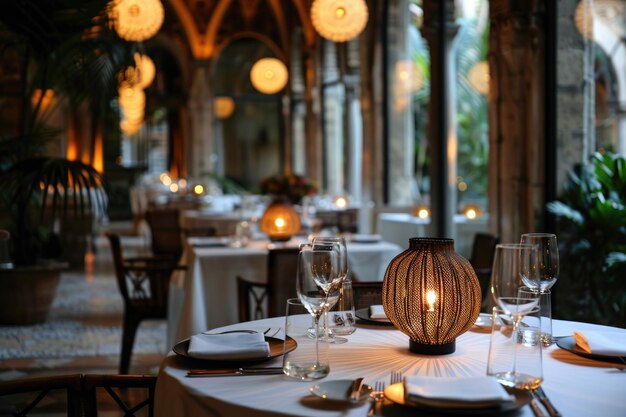
Where to Eat Near Paseo in Oklahoma City: Spanish Colonial Architecture Meets Contemporary Dining
Paseo Arts District in Oklahoma City occupies a six-block stretch of Northwest 30th Street between Robinson and Walker avenues, a neighborhood rebuilt around Spanish colonial revival buildings that now house restaurants, galleries, and shops. This guide covers what eating here actually means: who operates in Paseo, what the dining experience trades off against elsewhere in the city, and whether the neighborhood's aesthetic cohesion translates to a unified food identity.
The Paseo Restaurant Landscape
Paseo contains roughly a dozen food-focused businesses, but they do not form a single culinary district in the way that, say, the Stockyard City area clusters barbecue specialists. Instead, Paseo hosts individual restaurant concepts that chose the neighborhood for its physical character and foot traffic, not for shared cuisine or sourcing philosophy.
The neighborhood leans toward casual-to-moderate pricing and personal ownership. A meal for two at most Paseo restaurants, including drinks and tax, lands between $35 and $65. This sits lower than fine dining on Automobile Alley (east of downtown, where entrées alone often exceed $25) and at parity or slightly above neighborhood spots in Midtown or Bricktown, where chain presence is higher.
Paseo's defining constraint is parking. The district has roughly 150 public spaces, most of them lot-based rather than street-level. On weekend evenings, arrival before 6:15 p.m. or after 8:30 p.m. reduces waiting for a spot. Street-level lots charge nothing; the covered garage on the south side of the district charges $2 for the first three hours. This calculus matters when comparing Paseo to competitors like Restaurants at Penn Square or dinner along NW 23rd Street, where parking adjoins storefronts.
What Paseo Offers That Nearby Neighborhoods Do Not
NW 30th Street in Paseo was largely vacant retail and light industrial until the late 1990s. The Spanish colonial revival cladding, tile work, and courtyard layout were imposed deliberately and uniformly; no restaurant here predates 1998. This distinguishes Paseo from Stockyard City (a working agricultural district where food is secondary to livestock commerce) and from Bricktown (a former warehouse district east of downtown where restaurants occupy pre-existing brick shells).
The pedestrian experience differs accordingly. In Paseo, you park once and walk between venues without crossing major arterials. The district is roughly eight blocks of continuous storefronts and courtyards, making it practical for couples or groups to plan a meal plus browsing nearby galleries or shops in one two-to-three-hour window. Bricktown offers similar walkability but features more regional and national chains; Paseo's roster skews toward locally owned operations.
No major Oklahoma City restaurant corporation (Ted's Cafe Escondido, Cattlemen's Steakhouse, The Red Cup) operates primary locations in Paseo. This is not accidental. Paseo's infrastructure was built to attract independent owners willing to pay higher base rent in exchange for positioned foot traffic and neighborhood identity.
Dining Patterns by Day and Time
Paseo operates on a distinct weekly rhythm shaped by the arts district identity. Saturday evening (5 p.m. to 8 p.m.) is peak traffic; parking fills and wait times for tables typically exceed 20 minutes. Friday evening is secondary, with lighter traffic than Saturday. Weekday lunch (11:30 a.m. to 1 p.m.) sees professional workers from nearby Devon Energy offices and the Midtown area, but tables turn faster and parking remains available. Sunday brunch is present but smaller in volume than Saturday dinner.
Weekday evenings (Monday through Thursday) show the lowest traffic. Restaurants remain open but operate closer to break-even, with two-tops dominating and larger groups rare. If you seek conversation-friendly acoustics and staff attention, weekday dinner is preferable to weekend.
Many Paseo restaurants close Monday or Tuesday. This is standard for small independent operators and reflects real estate economics: operating costs remain fixed while weekend-driven revenue does not justify staffing all seven days. Confirm hours before visiting on weekday evenings.
How Paseo Compares as a Destination
Against Bricktown (east of downtown, along Sheridan Avenue and Main Street): Bricktown has higher foot traffic, more parking-adjacent entry, and more regional chain presence. Paseo has fewer options but higher perceived uniqueness and stronger visual coherence. Bricktown is better for walk-ins and groups; Paseo requires slightly more planning.
Against NW 23rd Street (from Meridian to Western): NW 23rd Street stretches over two miles and hosts 40+ food businesses, from established institutions to new openings. It offers more variety and easier parking adjacent to each restaurant. Paseo is more contained and cohesive; NW 23rd Street is better for comparison shopping or trying multiple concepts in one evening.
Against Stockyard City (south of I-40, along Agnew and Exchange avenues): Stockyard City centers on barbecue and Western heritage; most visitors go for one meal and leave. Paseo supports extended browsing and mixed agendas (eating plus gallery time). Stockyard City has authentic industrial context; Paseo has designed aesthetic context.
Against fine dining on Automobile Alley (east of downtown, around NE 23rd): Automobile Alley restaurants command higher prices, more formal dress codes, and reserved seating systems. Paseo is walk-in friendly and casual. Automobile Alley is better for celebrations requiring table control; Paseo suits spontaneous dining and couples' evenings.
Practical Considerations for Planning
If you want to eat in Paseo, book parking first. Arrive between 5 and 5:45 p.m. on Friday or Saturday if you want full choice without wait, or after 8:30 p.m. if you prefer thinner crowds. On weekdays, arrive anytime between 11:30 a.m. and 1 p.m. or 5 and 6 p.m. for immediate seating.
Check individual restaurant websites for holiday hours and any Monday or Tuesday closures before making the trip. Paseo has no central reservation system; most restaurants take walk-ins or phones calls but not online bookings.
Budget 40 to 75 minutes for a full meal, longer on weekend nights. The neighborhood's appeal depends partly on the walk between entry and seating, so expect less expedited service than in suburban locations.