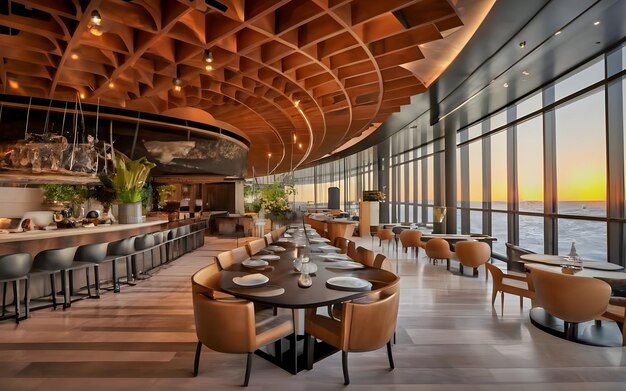
What to Expect at Packard's New American Kitchen in Midtown Oklahoma City
Packard's New American Kitchen operates in the Midtown district along NW 23rd Street, an area where restaurant density and chef-driven cooking have concentrated over the past decade. This guide covers what distinguishes Packard's from other new American kitchens in the metro, how the menu structure works, and which dishes justify a trip versus which are safer bets.
Location and Neighborhood Context
Midtown Oklahoma City has become the primary corridor for independent restaurants willing to work with seasonal ingredients and composed plates. Packard's sits within walking distance of other kitchens that share similar ambitions around technique and sourcing. The neighborhood supports a higher check average than Bricktown or Uptown, and diners here expect refined execution rather than novelty for its own sake.
The address matters because Midtown's foot traffic during evening hours is consistent enough that Packard's can operate with a smaller bar program than restaurants farther from residential density. Parking is street-accessible rather than requiring a lot, which affects how casual a visit feels compared to driving to a suburban location.
Menu Philosophy and Price Structure
New American menus in Oklahoma City typically oscillate between two approaches: restaurants that treat the category as a permission to ignore regional tradition, and those that use new American technique to reframe local ingredients. Packard's operates closer to the latter model, though the menu rotates seasonally, which means specific dishes available in March differ from June offerings.
Entrees typically range from $28 to $42, positioning Packard's in the upper-casual to fine-dining threshold. This price point requires that proteins are cooked with precision and that sides show intention rather than appearing as filler. Appetizers run $12 to $18, and most tables order two to three to share before entrees arrive.
The wine list emphasizes bottles under $60, a practical choice in a market where wine markup often exceeds 300 percent at higher-end establishments. This means wine pairings won't push a two-person check above $120 before tax and tip if you're limiting yourself to one glass per course.
What Works: Proteins and Preparation
New American cooking in Oklahoma City succeeds most visibly when kitchens source beef from regional ranches and then apply restraint to the preparation. Packard's benefits from this formula. Steaks and composed beef dishes tend to show the kitchen's technique most clearly because the quality of raw material is immediately apparent.
Dishes built around seasonal vegetables perform less consistently across new American restaurants in the metro. At Packard's, vegetable-forward plates work when the kitchen can source through direct relationships rather than broad distributors. This varies by season and by what grows well in Oklahoma's climate. Spring menus tend to execute vegetable sides more successfully than winter menus, simply because ingredient options expand.
Fish and seafood present a challenge for landlocked Oklahoma City restaurants. Unless Packard's sources from a distributor that turns over inventory rapidly, seafood dishes will taste fresher earlier in the week than later. This is a timing insight rather than a criticism of the kitchen.
Practical Ordering Strategy
Appetizers at new American restaurants often reveal kitchen priorities more clearly than entrees, which follow established formulas across the cuisine. Order something that showcases technique or a single ingredient treated multiple ways rather than a composed small plate with four components. This gives you a sense of whether the kitchen is executing fundamentals.
Avoid ordering the most expensive entree with the assumption that higher price means better execution. In composed cooking, a $32 plate often has more thought behind it than a $42 plate, which may simply carry a higher protein cost. The menu description matters more than the position on the list.
If Packard's offers a tasting menu, this is worth considering only if you're willing to eat unfamiliar dishes and the wine pairing is included. A tasting menu at this price point and in this market typically costs between $65 and $85 before wine, and represents the kitchen's highest-effort work but also highest risk if your palate doesn't align with the chef's.
Dining Experience and Timing
Reservations are necessary on Friday and Saturday, and recommended on Thursday. Midtown restaurants see irregular midweek traffic, meaning Tuesday and Wednesday tables may have longer waits between courses because kitchen staffing adjusts for lower volume.
The noise level in Midtown restaurants tends toward moderate-to-high because the neighborhoods supporting these restaurants prioritize walkability over soundproofing. If you're seeking a quiet dining experience, dinner before 7 p.m. or after 9 p.m. will be noticeably calmer than the 7:30 to 8:30 window.
Comparison to Other Midtown Options
Packard's occupies a specific position in the Midtown ecosystem: more refined than casual neighborhood bistros, less formal than French fine dining, and more focused on technique than restaurants that treat new American as a synonym for eclectic fusion. If you're choosing between Packard's and another kitchen in the same neighborhood, the distinction comes down to whether you want composed small plates with restrained flavor profiles or larger portions with bolder seasoning.
The staff at Packard's typically has basic wine knowledge and can discuss menu items with specificity, which matters when you're ordering unfamiliar preparations. Not all new American restaurants in Oklahoma City maintain this level of server training, so this is a practical distinction.
When to Visit
Packard's makes sense for: a special occasion where you want cooking technique to be the focus, a solo dinner where you can sit at the bar and watch the kitchen work, or a meal where you want to try dishes you wouldn't order at home. It makes less sense if you're primarily seeking a relaxed, high-volume meal or a specific regional cuisine executed with precision.
Book on a Thursday or Friday evening if you want the full experience with a complete bar program and no waits between courses. Tuesday through Wednesday offer lower prices on wine and quieter seating, though you sacrifice the energy of a full dining room.