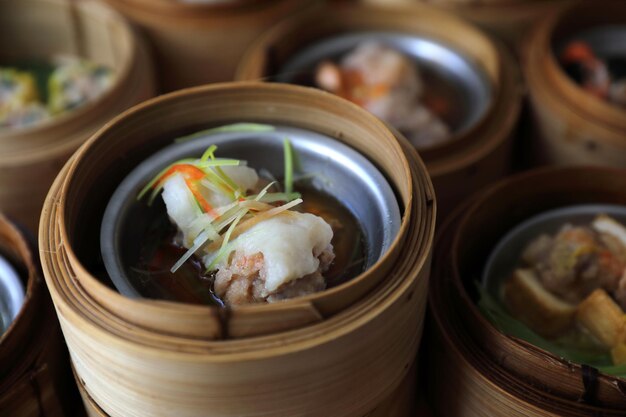
Dim Sum in Oklahoma City: Where to Find It and What to Expect
Dim sum dining in Oklahoma City exists in a narrow corridor. Unlike Houston, San Francisco, or Los Angeles, where dim sum carts roll through cavernous dining rooms and competition drives constant menu rotation, Oklahoma City has two primary destinations for the experience, both concentrated in the Chinatown district along NW 23rd Street between Meridian and Penn avenues. This guide covers what's actually available, how the two main venues differ, and what you should know before going.
The Practical Reality
The dim sum landscape here is built on the assumption that most diners are either part of the established Chinese-American community or willing to make a specific trip. There is no casual, walk-in dim sum culture. Both venues operate on sit-down service during limited hours, not the cart-and-order model you may have experienced elsewhere. That distinction matters: you order from a menu or a printed sheet, not from a server pushing a cart. This requires either speaking Cantonese, reading Chinese characters, or having someone at your table who can translate. English menus exist but are sometimes limited or require asking.
The Two Core Options
Golden Phoenix and Lam's Restaurant are the restaurants where Oklahoma City residents actually order dim sum. Both operate in the NW 23rd corridor and both keep similar weekend service patterns. Dim sum at either location typically runs Friday through Sunday, though you should call ahead. Prices cluster around $3 to $6 per dish, with most orders arriving as small plates designed for sharing. A full meal for two typically costs $25 to $40 before tip.
The key operational difference: Golden Phoenix historically operates a limited dim sum service during daytime hours, while Lam's offers dim sum during lunch primarily. Call ahead to confirm current hours, as restaurant schedules can shift seasonally. Both are Cantonese-focused establishments, so the menu emphasizes shrimp har gow, pork siu mai, and char siu bao, not Sichuan-inflected variations or fusion interpretations.
What to Order: The Practical Menu
Dim sum menus here follow traditional Cantonese categories. Steamed items (har gow shrimp dumplings, siu mai pork dumplings, and har cheung rice noodle rolls with shrimp) form the backbone. Fried items (spring rolls, taro croquettes) appear in smaller quantities than at larger dim sum halls. Baked goods like char siu bao (pork-filled buns) and egg custard tarts round out the selection.
The quality constraint is real: both restaurants receive fewer orders than high-volume dim sum halls in major metro areas, so turnover is lower. This means har gow should still be delicate and just-cooked, but you're not getting the same volume-driven consistency you'd find in a dim sum palace serving hundreds of diners daily. Siu mai tends to hold up better in lower-volume settings because pork filling is more forgiving than shrimp. Char siu bao here is typically solid.
One local advantage: because demand is lower, customization is easier. If you call ahead, some restaurants will prepare specific items or variations not on the standard menu. This is a negotiation, not a guarantee, and works best if someone speaks Cantonese or Mandarin, but it's worth knowing.
Logistics and Planning
Neither Golden Phoenix nor Lam's operates dim sum service daily. Expect Friday through Sunday, with Friday and Saturday mornings or early afternoons being peak hours. Lunch service typically runs 11 a.m. to 2 or 3 p.m.; call to confirm the exact window, as this varies by location and season. Dinner dim sum is rare; these are lunch-focused operations.
Parking is street parking on or near NW 23rd Street. Both restaurants are in walkable proximity on the same commercial strip, so if you're making a dim sum trip, you're already in the neighborhood. There is no reservation system at either location; you walk in and wait or ask about seating availability by phone first.
The clientele at both restaurants is mixed: regulars who live or work in the area, families with multi-generational connections to the Chinatown district, and occasional diners who've driven specifically for dim sum. This is not a tourist experience. The staff assumes you either know what dim sum is or are willing to learn by asking.
Beyond the Two Primary Venues
Other Chinese restaurants in Oklahoma City occasionally offer dim sum or dim sum-adjacent items during lunch, but neither operates a dedicated dim sum service comparable to Golden Phoenix or Lam's. If neither of those works for your schedule, you're better served calling ahead to confirm availability rather than arriving expecting dim sum.
The Comparison to Other Cities
If you've had dim sum in a major metropolitan area, recalibrate expectations. Oklahoma City's dim sum is competent and authentic in the dishes offered, but it operates at a different scale. You won't find 100+ items on a menu, four different types of har gow prepared simultaneously, or the rapid-fire ordering culture that larger cities support. What you get instead is straightforward Cantonese dim sum prepared for a community that values consistency over novelty.
What You Actually Need to Know
Book or call ahead if you want to ensure availability and hours. The NW 23rd Street Chinatown corridor is where you go; no other neighborhood in Oklahoma City has dim sum service. Bring cash or confirm card acceptance when you call. If you don't speak Cantonese or Mandarin, go with someone who does, or arrive knowing exactly which three to five dishes you want to order.
The dim sum experience in Oklahoma City is bounded, specific, and rooted in the community that established and maintains the restaurants. It's not casual. It requires intention. But if you show up on a Friday or Saturday morning prepared to order and to sit, you'll get genuine Cantonese dim sum prepared competently and served without performance.