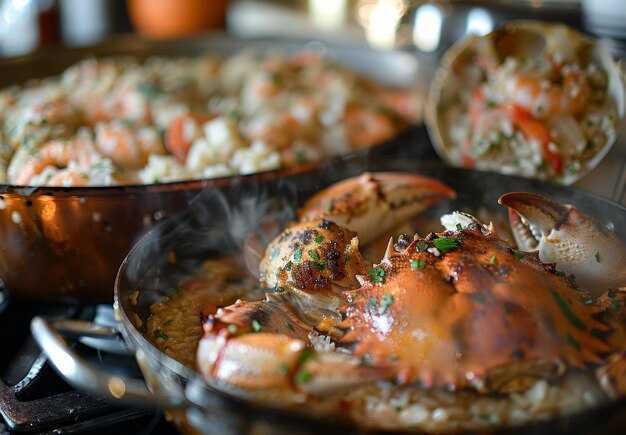
Where to Find Authentic Cajun Food in Oklahoma City
Oklahoma City's Cajun restaurant scene is smaller than its barbecue or steakhouse presence, which means the options are more selective but also more deliberately executed. This guide covers where Cajun cuisine actually exists in the metro area, what separates a competent kitchen from a tourist-oriented one, and which neighborhoods have depth beyond a single location.
What Cajun Means in Oklahoma City
Cajun cooking centers on layered aromatics (the holy trinity of onion, celery, and bell pepper), stock-based dishes, and the use of pork, seafood, and rice as structural ingredients. It differs from Creole by being less urban and less reliant on African and French formal technique. In Oklahoma City, most restaurants marketing Cajun food either nail the fundamentals or misread the genre as "anything spicy from Louisiana."
The metro area's Cajun restaurants cluster around two patterns: standalone concepts in Midtown and Bricktown that treat Cajun as a serious cuisine, and Creole-Cajun hybrids in Uptown that emphasize atmosphere over historical accuracy. Price points range from $12 to $28 for entrees, with the most consistent kitchens landing in the $16 to $22 range.
Bricktown and Downtown
Bricktown hosts one of the city's longest-running Cajun establishments, Cattlemen's Steakhouse, though it functions primarily as a steakhouse with Cajun-inflected sides rather than a Cajun kitchen that happens to serve beef. The distinction matters if you're seeking gumbo or crawfish boils as primary dishes.
For Cajun-specific execution, restaurants in the Bricktown/Downtown zone tend to split focus between lunch crowds seeking speed and dinner guests expecting bar-forward experiences. This sometimes means crawfish and sausage are solid, but roux-dependent dishes like gumbo z'herbes (vegetable gumbo requiring patient browning of roux) appear less often. Hours typically run 11 a.m. to 10 p.m. on weekdays, with weekend extensions into the 11 p.m. range.
Midtown's Cajun Presence
Midtown, stretching along NW 23rd Street and surrounding blocks, contains the highest density of intentional Cajun restaurants. This neighborhood's restaurant profile generally emphasizes ingredient quality and technique over casual convenience, which translates to thinner roux bases (meaning more flavor development, less gluey texture) and seafood sourced from established suppliers rather than commodity distributors.
Several Midtown Cajun spots maintain consistent gumbo bases, offer crawfish during in-season months (typically December through May in Oklahoma supply chains), and treat po'boys as construction problems rather than simple sandwiches. Andouille sausage appears not as seasoning but as a distinct component. Entree prices in Midtown typically run $16 to $25, slightly higher than Bricktown equivalents.
Uptown's Cajun-Creole Hybrids
Uptown (northwest of downtown, bounded by NW 23rd to the south and extending into neighborhoods near Classen Boulevard) contains restaurants that blend Cajun and Creole elements, or present themselves as New Orleans-style without strict adherence to either category. These venues often emphasize cocktails, live music, and visual presentation. The trade-off is usually less fidelity to traditional technique. Entrees run $14 to $22, with cocktails separately priced at $8 to $12.
Uptown restaurants in this category tend toward open kitchens visible from dining areas, dim lighting designed for evening crowds, and menus that rotate seasonal items. A restaurant might serve excellent jambalaya and mediocre gumbo, or vice versa. Read reviews specifically mentioning individual dishes rather than overall ambiance.
Evaluating a Kitchen's Cajun Competence
Three dishes reveal a kitchen's actual capability: gumbo, jambalaya, and po'boys.
Gumbo requires managing roux (fat and flour cooked together, typically 20 to 45 minutes until deep brown) without burning it, building stock depth, and timing proteins so they cook through without becoming textured. Many Oklahoma City kitchens serve acceptable gumbo; fewer serve excellent gumbo where the roux tastes like something rather than brown paste.
Jambalaya, by contrast, tests rice cooking and seasoning balance. The rice should absorb liquid without becoming mushy, and meat or seafood should distribute evenly rather than clustering. A restaurant's jambalaya reveals whether they cook rice to order or rely on pre-cooked batches reheated with liquid.
Po'boys demand fresh bread (soft interior, crisp crust, not re-toasted), properly fried protein (shrimp or catfish cooked to doneness without greasiness), and controlled sandwich assembly (bread soaked in sauce, but not disintegrating). Many Midtown and Uptown locations nail this; Bricktown outlets often serve adequate versions that lack textural contrast.
Seasonal and Sourcing Considerations
Crawfish availability determines whether a restaurant serves boiled crawfish, crawfish etouffee, or crawfish bisque. Oklahoma City restaurants typically source crawfish from Louisiana suppliers December through May, with limited availability June through November. A restaurant advertising year-round crawfish likely uses frozen product, which is acceptable for bisques and etouffees but noticeably inferior for boils where texture matters.
Andouille sausage quality varies. High-end Cajun restaurants in Oklahoma City source from New Orleans suppliers (Jacoby's, Savoie's) or regional producers; mid-range restaurants use commodity sausage that lacks the black pepper bite and garlic clarity of traditional versions. Price differences are modest (typically $1 to $3 per dish), so this reveals kitchen priorities more than profit pressure.
Practical Decision Framework
If you're seeking Cajun restaurants with strong technical fundamentals, start in Midtown. Order gumbo as your first dish from any new restaurant; it's the best test of kitchen depth.
If you prefer atmosphere alongside food, try Uptown venues, but check specific dish reviews before choosing. Avoid assuming that "New Orleans-style" or "Louisiana kitchen" guarantees Cajun competence; these phrases describe branding, not technique.
If you want Cajun alongside other cuisines, Bricktown has options, but they're secondary to the primary concept. You'll eat well but won't find the city's most focused Cajun cooking.
For crawfish, confirm seasonal availability by calling ahead December through May. June through November, eat etouffees and bisques instead; a good kitchen makes these with frozen crawfish as well as fresh.
Budget $18 to $25 per person for entree and basic sides in competent Cajun restaurants, $12 to $18 in casual spots, and $20 to $30 in upscale Uptown venues where plating and cocktails add cost. This excludes alcohol, which varies widely by establishment.