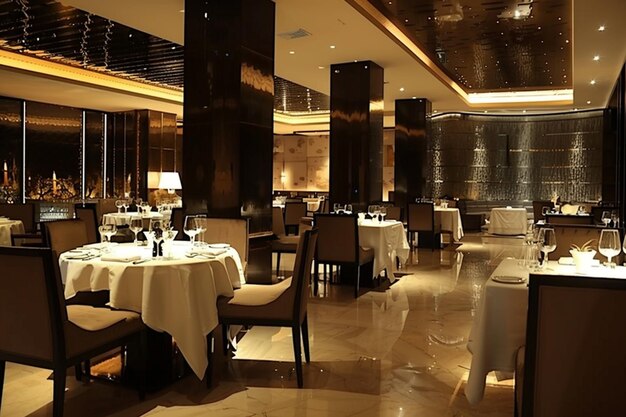
Where to Eat Well in Oklahoma City: A Guide to Fine Dining Beyond the Defaults
Oklahoma City's fine dining scene operates on a different scale than coastal markets, which means prices stay reasonable and reservations rarely require planning weeks ahead. This guide covers restaurants where technique matters, ingredients are sourced with intention, and a meal takes two hours without feeling rushed. You'll understand the actual trade-offs between Oklahoma City's best options, which neighborhoods support serious cooking, and what price range gets you genuinely excellent food versus what you're paying for ambiance alone.
What Fine Dining Means Here
Fine dining in Oklahoma City doesn't follow a single template. The city has no Michelin guide, no star system, and no critical consensus that narrows the field to five "correct" choices. Instead, excellence appears scattered across different neighborhoods and takes different forms: a French-trained chef working with Oklahoma beef, a James Beard-nominated restaurant that emphasizes technique over spectacle, a chef-owned spot in Midtown that sources from local farms. This actually favors the diner. You're not competing with a national reputation for reservations, and you're eating in a market where chefs often own their own places and eat in their own dining rooms.
The realistic ceiling for a serious dinner for two in Oklahoma City, including wine and tax, runs between $120 and $200 before tip. Restaurants at the higher end of that range typically offer multi-course tasting menus or feature proteins like dry-aged beef and imported seafood. Mid-range fine dining, $80 to $120 for two, covers restaurants with seasonal menus, house-made pasta, and careful plating but without the theatrical service or rare ingredients that push prices higher.
Bricktown and Downtown: Scale and Formality
Bricktown has long anchored Oklahoma City's restaurant district, and several fine dining establishments operate there, though the neighborhood skews toward date night presentation rather than kitchen innovation. Restaurants in Bricktown tend toward consistent execution of familiar dishes: steaks, fresh fish, risotto, duck. The advantage is reliability and professional service. The disadvantage is that innovation rarely happens on the Bricktown axis. Expect to pay $50 to $70 per person for entrées in this area, with full meals running $100 to $150 for two.
Downtown proper, outside the Bricktown perimeter, has fewer fine dining options but includes some of the city's most technically accomplished kitchens. Downtown restaurants often occupy smaller spaces, seat fewer covers, and operate as genuine chef's restaurants rather than hospitality businesses. Service is attentive but less formal than Bricktown equivalents. Entrée prices track similarly ($50 to $75), but the food reflects more direct decision-making by the chef.
Midtown: Where Menu Development Actually Happens
Midtown, the neighborhood roughly bounded by NW 23rd Street and NW 36th Street, has become the center of Oklahoma City's culinary ambition over the past decade. Restaurants here operate with smaller margins, shorter menus, and more seasonal rotation than Bricktown establishments. A Midtown restaurant might run 15 seats, change its menu every four weeks, and source fish from a supplier who calls when something exceptional arrives. This approach means you cannot predict exactly what you'll eat, and you should plan around the restaurant's stated menu cycle.
Prices in Midtown fine dining tend lower than comparable food in Bricktown, typically $45 to $65 per entrée, because the restaurants operate with lower overhead. The trade-off is less formal service, smaller dining rooms (which can feel cramped or intimate depending on your preference), and less predictability. Several Midtown restaurants do not take reservations or take only limited seatings. If you're planning a specific date and time, confirm availability directly with the restaurant rather than relying on online reservation systems, which often show false availability for Midtown spots.
Evaluating by What You Actually Want
If your priority is an impressive, formal experience with skilled service and you're comfortable with slightly more conservative food, Bricktown delivers that consistently. You know what you're getting: a carefully executed meal in an established setting, usually with good wine programs and professional pacing.
If your priority is eating the best food a chef can cook on a given night, with less concern for formality, Midtown and downtown locations offer that. Expect smaller portions of more interesting food, less structured service (though still attentive), and a menu that changes. These restaurants suit people eating out regularly who want variation.
If you're looking for a specific cuisine (French, Italian, Japanese), fine dining in Oklahoma City is limited. The city has skilled French-trained chefs, but they typically express that training through contemporary American food rather than traditional French menus. Japanese fine dining exists but is minimal. Italian fine dining is slightly better represented, with at least one chef focusing seriously on house-made pasta and Italian ingredients. If a specific cuisine is essential to your plan, verify the restaurant's actual menu before booking.
The Practical Reality of Booking
Oklahoma City restaurants are not difficult to book. Most fine dining establishments have open tables within two weeks, and many within days. This means you can make a decision based on what sounds good right now rather than planning months ahead. Call the restaurant directly rather than using online reservation platforms; the chef or manager can often tell you what's cooking well that week and may have a better sense of actual availability than an automated system.
Dress code operates on a spectrum rather than in strict categories. "Business casual" at most Oklahoma City fine dining means no athletic wear, no visibly torn clothing, no baseball caps; beyond that, you're fine. Jeans and a nice top work almost everywhere. Only the most formal Bricktown establishments expect blazers, and none require them.
Finishing Your Planning
Start by deciding whether you want the formality and structure of an established fine dining room or the focus and variation of a chef-driven smaller restaurant. That decision alone narrows the field significantly. Then verify current menus and availability directly with the restaurant, especially if you have dietary restrictions or strong preferences. Oklahoma City's fine dining scene is small enough that phone calls matter; the chef or manager can usually answer specific questions about sourcing, preparation, and what's performing well that service.