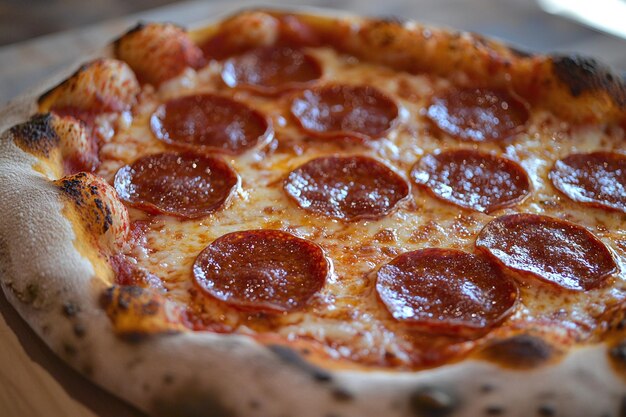
What to Expect from Empire Slice House in OKC's Pizza Landscape
Empire Slice House operates in a competitive Oklahoma City pizza market where New York-style slices compete with Detroit-style rectangles and Neapolitan approaches. This guide explains what Empire brings to that competition, how it compares to other serious pizza operations in the metro, and what makes it a specific choice rather than a generic one.
The New York Slice Model in Oklahoma City
Empire Slice House builds on the New York pizza formula: thin crust, high-volume turnover, hand-tossed dough, and slices sold by the piece or box. In Oklahoma City, this approach occupies distinct territory. The city has seen growth in dedicated pizzerias over the past decade, but many operate on the Neapolitan wood-fired model (longer cook times, smaller menus, higher per-slice costs) or the casual chain model. Empire's New York-style execution targets the lunch crowd and casual dinner market that values speed and affordability without sacrificing technique.
The crust at a New York-style operation depends entirely on dough fermentation and water chemistry. Oklahoma City's water hardness and mineral content affect how flour hydrates and gluten develops. Houses that import water or adjust their recipes for local conditions tend to produce crispier, more stable crusts than those that don't. This matters because a soggy undercarriage is the most common complaint about thin-crust pizza in areas without established New York-style pizza cultures.
How Empire Positions Against Local Competitors
The Oklahoma City pizza ecosystem now includes multiple strategies. At one end, Andolinis Pizzeria (multiple locations including Midtown and Edmond) operates an upscale Sicilian and Southern Italian model with rectangular slices, higher ingredient costs, and prices in the $4.50 to $5.50 per-slice range. Cattlemen's Steakhouse and similar venues serve pizza as an adjunct to other menus. Independent operators like those in Bricktown and the Plaza District focus on Neapolitan wood-fired approaches with cook times of 90 seconds to 3 minutes per pie.
Empire's positioning differs: New York-style slices at lunch-friendly prices and availability. A typical Empire slice costs less than Andolinis offerings, and the service model assumes you're buying one or two slices and eating immediately, not sitting for a full meal experience. This is evaluative rather than hierarchical. A reader choosing between Empire and a wood-fired pizzeria is choosing between speed and ambiance, price point and ingredient showcasing, casual grab-and-go and destination dining.
Neighborhood Presence and Accessibility
Empire Slice House's location matters for frequency of visits. Placement in Midtown, downtown, or near the Plaza District changes the operational context significantly. An OKC pizzeria in Midtown serves different traffic patterns than one in Bricktown or near OCU. Midtown locations see lunch crowds from office workers and students; Bricktown locations rely more on evening and weekend entertainment traffic. This affects menu emphasis, hours, and slice rotation speed, which in turn affects freshness.
Verify current location and hours before visiting, as independent restaurants adjust availability seasonally and sometimes relocate. If Empire operates multiple locations, each location's supply chain and prep schedule may differ slightly, affecting consistency.
Dough, Sauce, and Cheese as Differentiators
The three core components of pizza reveal an operation's priorities. Dough fermentation time ranges from 24 hours to 72 hours at quality New York-style houses. Longer fermentation produces more complex flavor and better digestibility but requires scheduling discipline and storage space. Many Oklahoma City pizzerias use shorter fermentation cycles due to production constraints.
Sauce choices fall into three main categories: tomato-forward with minimal seasoning (preserves tomato quality), heavily seasoned blends (masks mediocre tomato), or non-cooked raw tomato. Each choice reflects sourcing and technique. Houses that source San Marzano or similar high-acidity tomatoes tend toward minimalist sauce work. Those using commodity tomatoes tend toward heavier seasoning.
Cheese strategy separates casual from serious operations. Using a blend of mozzarella types (low-moisture for structure, whole-milk for flavor) costs more than using a single commercial blend but produces better melting characteristics and browning. Some New York-style operations use margarine-based cheese blends to cut costs and simplify storage; others use 100% real cheese. This is directly observable: real cheese browns and browns unevenly; blended products melt uniformly and gloss over.
Toppings, Pricing, and Volume Expectations
New York-style operations succeed on volume, which means customers expect broad topping availability and quick preparation. A typical menu includes 15 to 25 toppings. Specialty pies (names like "The Empire," "The Godfather") are either prepared to a recipe or assembled to order. Pre-made specialty slices, kept under heat lamps, move faster but sacrifice quality after 30 minutes.
Pricing follows predictable logic. A plain cheese slice might cost $3 to $4; each additional topping adds $0.50 to $1.00. A whole pie (typically 8 slices) runs $18 to $28 depending on size and toppings. This is lower than Neapolitan wood-fired pizzerias in Oklahoma City, where a whole pie averages $22 to $35, but higher than national chains.
When to Visit and What to Order
Lunch service (11 AM to 2 PM) is the optimal window for fresh slices at high-turnover establishments. Afternoon lull (2 PM to 4 PM) often means older inventory under heat. Dinner service (5 PM onward) benefits from the evening crowd but competes with sit-down restaurants for the same customers.
Order simple combinations early in service. A cheese slice or a two-topping pie tastes noticeably better at 11:15 AM than at 8:15 PM. Complex toppings mask dough and sauce quality, so if you're evaluating a new pizzeria, order a plain cheese slice first. The crust's structural integrity (does it fold without cracking or going limp?), the sauce's balance (is tomato flavor distinguishable, or is it buried in salt and garlic?), and the cheese's browning pattern (mottled gold or uniform gloss?) reveal the operation's standards immediately.
Practical Takeaway
Empire Slice House operates in a specific niche: quick, affordable New York-style pizza for lunch or casual dinner. If you live or work near its location and want pizza ready in five minutes rather than 15, it serves a clear purpose. If you're comparing it to wood-fired Neapolitan operations, understand that you're trading ambiance and ingredient showcasing for speed and price. Compare it instead to other New York-style sliceries in the Oklahoma City metro or to chains like New York Pizza Company or similar franchises. Examine the crust's crispness, the sauce-to-cheese ratio, and the freshness rotation under heat. These details determine whether it becomes your default lunch stop or a occasional option.