What to Eat at Chow's in Oklahoma City: Menu Strategy and Timing for Maximum Value
Chow's occupies a specific position in Oklahoma City's Asian dining landscape: neither fine-dining destination nor casual strip-mall operation, but a mid-tier Chinese establishment where execution matters more than ambition. Understanding what works here, when to order it, and how it compares to other options in the city requires knowing the kitchen's actual strengths rather than the menu's theoretical scope.
The Core Competency: Wok-Forward Preparations
Chow's operates a legitimate wok station. This is not universal among Chinese restaurants in Oklahoma City, and it shapes what you should prioritize. Dishes that spend time over high heat—whether stir-fries, chow meins, or fried rice—maintain the textural separation between components that separates adequate from memorable. The vegetable-forward stir-fries show this most clearly: bok choy retains snap, snap peas stay bright rather than collapsing into the sauce, and garlic develops a slight char rather than turning bitter.
By contrast, dishes that rely on sauce volume or extended braising perform less distinctly. Whole steamed fish, when available, benefits from the wok expertise in the finishing touches but cannot overcome the fundamental constraint of any steamed preparation: it tastes steamed. Fried rice made to order shows better technique than fried rice made ahead, which registers as a holding operation by midday service.
The practical implication: come for lunch rather than dinner if your priority is stir-fried vegetables or noodle dishes. The lunch menu runs from 11 a.m. to 2 p.m., and tickets are processed faster, keeping food off the line and onto your table while wok temperatures are actively managed for each order. Dinner service, particularly after 7 p.m., runs on longer heat cycles and larger batch production.
Pricing and the Lunch Window
Lunch entrees at Chow's range from approximately $7 to $10, depending on protein selection. Dinner entrees run $12 to $16 for the same dish. This is a meaningful gap in Oklahoma City's dining economy, where $7 lunch specials are common but execution variance is high. The combination plate approach—entree plus fried rice or chow mein, plus soup—delivers more volume than à la carte ordering and costs less overall. Verify current pricing by calling ahead, as lunch specials shift seasonally.
Chow's does not maintain a printed online menu as of late 2024, which means you cannot pre-plan by cuisine type or protein in the way you might at competitors with digital menus. This friction point means calling (405) 235-8888 is faster than guessing.
How Chow's Compares Locally
The nearest equivalent in execution level is Tamashii Ramen on N.W. 23rd Street, which also emphasizes wok technique but in a Japanese framework and at higher price point ($13 to $16 for entrees). Tamashii's advantage is consistency across daytime and evening service; Chow's advantage is cost and broader menu range. If you want Chinese-specific vegetable stir-fry at lunch, Chow's is the more direct choice.
For dim sum service, Chow's does not offer it. If you want that format in Oklahoma City, you must travel to the Asian District in Midtown or call ahead to other establishments. This is a significant limitation for readers accustomed to dim sum as a category.
New China, also in Oklahoma City, operates a larger menu and maintains steadier dinner-hour execution, but lunch specials there are less aggressively priced than Chow's, and the wok station is smaller. New China is a better choice if you want broader menu coverage or if your timing is inflexible.
What to Order and What to Avoid
Beef and broccoli benefits from the wok operation: beef maintains a slight char on the exterior, broccoli avoids mushiness, and the sauce coats rather than drowns. Orange chicken, if available, shows the kitchen's sauce balance—sweet without cloying, with visible citrus zest rather than bottled flavoring. Kung Pao chicken incorporates peanuts that maintain their own flavor rather than dissolving into the sauce.
Egg rolls perform well because the filling-to-wrapper ratio is generous and the oil temperature is actively monitored. The interior stays creamy while the exterior crackles.
Avoid the sweet and sour pork if you prefer wok-made dishes. The protein comes breaded and fried in advance, then combined with sauce at order time. This method produces a textural separation problem: the breading absorbs moisture from the sauce rather than the sauce coating it. The result tastes safe and forgettable.
Chow mein noodles should be your second choice after stir-fries. The noodles arrive with a slight crisp exterior and maintain separation from the vegetables and protein. Lo mein, by comparison, tends toward uniformity.
Location and Practical Information
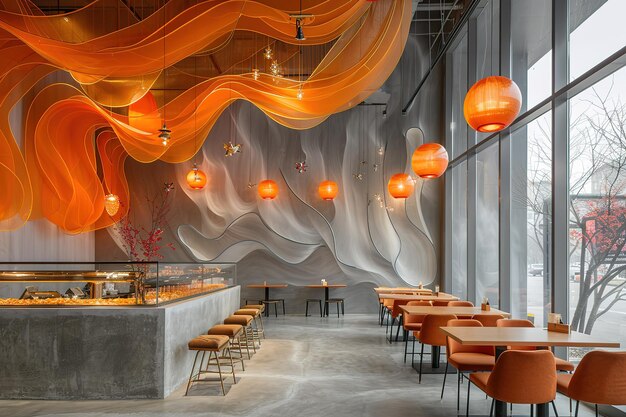
Chow's is located in a mixed-use shopping center on the northwest side of Oklahoma City, not in Midtown or the Plaza District where denser restaurant clusters exist. Parking is immediate and free. The dining room is small, with roughly ten tables, which means wait times can accumulate during peak lunch hours (noon to 1 p.m.) on weekdays. Takeout orders move faster than dine-in, particularly if you call ahead.
The neighborhood surrounding Chow's is primarily residential and commercial, not pedestrian-oriented. Plan on driving rather than walking as part of a restaurant-crawl day.
When to Make the Trip
Chow's is worth a deliberate visit if you prioritize stir-fried vegetable quality and lunch-hour pricing in Oklahoma City, and you have flexibility to avoid dinner service. It is not a destination restaurant. It is a consistent neighborhood operation where the kitchen's technical competency in one cooking method (wok work) outweighs menu breadth or atmosphere. If you want quick Chinese lunch with actual technique visible in the finished dish, call ahead and arrive between 11:30 a.m. and 1:30 p.m. If you are dining at 7 p.m. or later, the trade-off shifts toward other options.