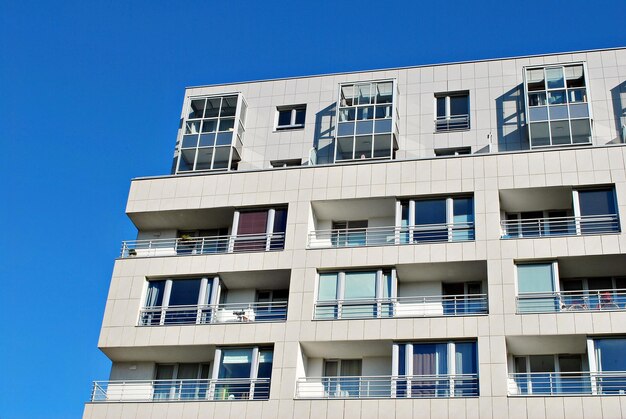
What The Avery Tells You About Oklahoma City's Luxury Rental Market
The Avery, a mid-rise apartment complex in Midtown Oklahoma City, functions as a useful marker for understanding how the city's rental market has shifted over the past decade. This guide explains what The Avery's positioning reveals about luxury multifamily development in Oklahoma City, where you'll find comparable properties, and what residents and investors should know about this segment of the market.
The Avery's Market Position
The Avery sits in Midtown, the neighborhood bounded roughly by NW 10th Street to the south, NW 23rd Street to the north, Western Avenue to the west, and Meridian Avenue to the east. This location places it within walking distance of restaurants, galleries, and mixed-use retail along the core blocks of the district. The property competes in Oklahoma City's upper-tier rental category, where unit prices reflect finishes, amenities, and neighborhood demand rather than scarcity alone.
The distinction matters for investors and residents evaluating the market. Oklahoma City's rental landscape splits clearly between workforce housing (typically $800–$1,100 per month for a one-bedroom) and lifestyle-oriented properties targeting professionals and empty-nesters willing to pay for design and services. The Avery belongs to the latter group. Understanding this division helps explain why certain neighborhoods command premiums while others see steady but undifferentiated demand.
Comparable Properties and Trade-Offs
The Avery competes directly with a handful of other Midtown and near-Midtown properties, each with distinct positioning:
Midtown core options include properties like those along NW 16th and NW 23rd Street corridors, where newer construction and renovation have concentrated. These typically offer rooftop amenities, fitness centers, and ground-floor retail activation. Unit counts range from 60 to 200+. The trade-off: Midtown properties command the highest rents per square foot in Oklahoma City, generally $1.30–$1.70 for a one-bedroom, but tenants accept walkability and neighborhood character in exchange.
Bricktown alternatives run parallel in price but differ in aesthetic and tenant profile. Bricktown properties often appeal to younger renters and hospitality workers; the neighborhood's tourism draw means seasonal fluctuation in occupancy rates. Bricktown rents typically track $20–$40 below Midtown for comparable square footage, reflecting lower perceived lifestyle premium.
Upscale suburban options in areas like The Village (northwest of the city center) or near Lake Hefner position themselves on amenity density and car-dependent convenience rather than walkability. These properties often rent $200–$400 below Midtown equivalents, a meaningful gap for cost-conscious renters, though they serve fundamentally different use cases.
Legacy central properties closer to downtown proper (near Automobile Alley or further east) rent $300–$600 below Midtown, appealing to renters for whom neighborhood identity matters less than proximity to downtown employment or cost minimization.
The Avery's position within this hierarchy reflects Midtown's maturation as Oklahoma City's highest-density residential neighborhood and primary draw for renters prioritizing walkable urban living over suburban isolation.
What The Avery's Presence Means for the Broader Market
The existence of The Avery and similar properties signals that Oklahoma City's multifamily development has consolidated around a specific thesis: that a population segment exists here willing to pay urban-market rents for urban-market living. A decade ago, that thesis was unproven. The accumulation of properties like The Avery in Midtown, along with renovation activity in areas like Automobile Alley and Bricktown, suggests the thesis has held.
This concentration carries real estate implications. Developers recognize Midtown as a "proven market" for new construction or substantial repositioning. This drives investment capital toward the neighborhood, which in turn drives land values and conversion opportunities. Several single-family homes and older multifamily buildings in Midtown have been demolished or substantially renovated to capture rent growth. That cycle continues as long as demand holds.
For renters and prospective residents, The Avery's success indicates that Midtown supply has expanded without meeting all demand, keeping rents relatively stable in that neighborhood. However, this also means Midtown properties fill quickly and offer limited move-in specials compared to suburban or secondary neighborhoods.
Investment Perspective
From an ownership standpoint, The Avery represents the type of property that generates appeal for institutional capital. Mid-rise (typically 4–8 stories), newer construction or fully renovated, located in a gentrifying but established neighborhood, with strong amenity packages and professional management all lower perceived risk. This means The Avery likely has institutional backing, competitive debt terms, and stable occupancy rates.
For individual investors considering Oklahoma City multifamily acquisitions, The Avery's market positioning suggests that Midtown value-add opportunities (older buildings amenable to renovation) are becoming rarer as supply tightens. Profit margins on new construction in Midtown have compressed as land costs have risen. This shifts opportunity into secondary neighborhoods where acquisition prices remain lower relative to achievable rents, though with higher execution risk and longer stabilization timelines.
Practical Takeaway for Renters and Residents
If you are evaluating whether to rent at The Avery or a similar Midtown property, the decision hinges on whether the walkability premium justifies the rent differential for your specific situation. The Avery offers proximity to restaurants, galleries, and services clustered within Midtown, plus access to downtown without a commute. That has real value if those amenities align with how you actually spend your time. If you work in a suburban office park and spend weekends elsewhere, the Midtown premium becomes unjustifiable expense. If, however, your professional and social life centers on central Oklahoma City and you rarely drive to meetings or events, The Avery's position pays for itself in time saved and lifestyle integration.
For investors, the lesson is simpler: The Avery and its peer properties have validated Midtown as a multifamily market. The risk now lies in oversupply. New development should focus on neighborhoods one tier below full gentrification, where acquisition costs remain favorable relative to achievable rents and development risk is manageable.