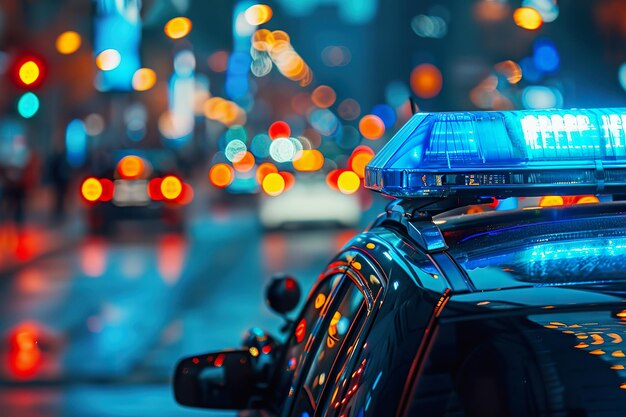
How Police Pursuits Work in Oklahoma City and When They Stop
When Oklahoma City Police Department officers initiate a chase, the decision involves specific departmental policies, traffic patterns unique to the metro area, and public safety calculations that differ from smaller Oklahoma towns. This guide explains the framework that governs these incidents, the geographical and operational factors that shape them, and what residents should understand about the risk-benefit analysis embedded in pursuit policy.
The OCPD Pursuit Policy Framework
The Oklahoma City Police Department operates under a pursuit policy that permits officers to engage in vehicle chases only when the suspect poses an immediate threat to public safety or has committed a serious felony. This is restrictive compared to earlier decades but reflects a national shift toward liability reduction and recognition that high-speed pursuits endanger civilians who have no role in the crime.
The policy does not mandate that officers pursue every fleeing suspect. Supervisors monitoring radio traffic can order a discontinuation at any point. This distinction matters: a chase that began lawfully can be called off mid-pursuit if conditions deteriorate, traffic density increases, or the suspect's driving becomes reckless enough that the threat to bystanders outweighs apprehension of the individual.
Felonies that typically justify pursuit include violent crimes, DUI cases where the driver has already caused injury, and certain property crimes involving weapons. Traffic violations alone, shoplifting, or low-level drug possession do not trigger pursuit authorization in Oklahoma City, though they might in rural counties where highway speeds and sparse traffic create different equations.
Geography and Pursuit Risk Zones
Oklahoma City's layout creates natural hot spots for pursuit risk. The downtown corridor and Midtown neighborhoods around NW 23rd Street have high pedestrian traffic, narrow corridors between parked cars, and unpredictable foot traffic that makes high-speed pursuits exceptionally dangerous. Pursuits initiated in these areas tend to be called off or deescalated quickly.
Interstate 40 running east-west through the city and I-35 running north-south present opposite conditions: longer sightlines and higher speeds but also interstate commerce traffic that can turn a pursuit into a multi-vehicle collision risk within seconds. The OCPD and Oklahoma Highway Patrol coordinate jurisdiction and policy on interstate incidents; Highway Patrol typically assumes lead responsibility once an incident reaches I-40 or I-35, and their pursuit thresholds may differ slightly from city policy.
Northwest Oklahoma City, including areas served by precincts covering NW 50th Street and beyond, often involves residential streets where pursuit speeds spike because road design permits them but pedestrian populations change unpredictably. South Oklahoma City near I-44 and east toward Midwest City contains mixed industrial and residential zones where pursuits can rapidly transition between low-risk and high-risk environments.
The Cost of Pursuit: Liability and Insurance
The city faces significant financial exposure from pursuit incidents. Lawsuits arising from innocent bystanders struck during police chases have cost Oklahoma City and other municipalities millions in settlements. This creates institutional pressure to tighten policy beyond what might seem tactically advantageous in a single incident.
The Oklahoma City Police Department's liability insurance and the city's risk management team effectively act as a second policy layer. When an officer initiates a pursuit, the city assumes legal liability not only if the suspect causes a crash but also if a bystander is harmed. This asymmetry pushes policy toward caution: the city pays for injuries to innocent parties, while the suspect may have no resources for restitution.
Supervisors reviewing pursuit-eligible incidents consider this math explicitly. A fleeing suspect wanted for a non-violent felony might not justify pursuit on a residential street at 2 p.m. on a weekday, even though the crime itself meets policy thresholds, because the pedestrian density and liability exposure outweigh the public safety benefit.
Radio Dispatch and Real-Time Decision Making
When a chase begins, the initial officer makes the decision, but the dispatcher and shift supervisor assess whether to continue. The OCPD dispatch center, located downtown, receives real-time information from units and can hear street conditions, suspect behavior, and bystander presence. A supervisor monitoring the channel can override an officer's judgment and order disengagement.
This structure matters because it creates a check on individual officer judgment. A pursuing officer focused on the suspect may not perceive deteriorating traffic conditions or pedestrian movement ahead. A supervisor in the dispatch center, managing multiple information streams, may decide the collective risk has crossed a threshold.
The dispatcher also coordinates with other agencies. If a chase approaches the boundary with Midwest City, Norman, or the Oklahoma County Sheriff's Office jurisdiction, the dispatcher alerts those agencies. Multi-jurisdictional pursuits complicate policy compliance because each agency operates under its own guidelines. The OCPD typically does not pursue beyond city limits unless the suspect is wanted for a serious violent felony and coordination with the receiving jurisdiction is confirmed.
Outcomes: Apprehension Rates and Escape Probability
Data on Oklahoma City Police pursuits is not routinely published in format accessible to the general public, unlike some larger departments that report annual statistics. The OCPD does not maintain a searchable public database of pursuit incidents, their duration, distance, or outcome.
What is known from police reports and news accounts: most pursuits that begin in Oklahoma City are terminated within a few minutes or miles. Extended chases lasting 15 or more minutes are less common, partly because the city's street grid allows suspects multiple escape routes but also because officers understand they will face criticism and possible discipline if a pursuit results in injury and policy was violated.
Suspects who flee often escape on foot after abandoning a vehicle, which is why pursuits typically end with the vehicle stopped and the occupants running rather than with a dramatic apprehension at vehicle speed. The chase accomplishes driver identification and a fixed location for follow-up investigation, even if the suspect escapes on foot.
What Residents Should Know
If you witness a police pursuit, the safest response is to pull over, away from the direction of travel, and remain inside your vehicle with doors locked until the incident passes. Do not attempt to help, block the suspect's path, or follow the chase.
If a pursuit occurs near your residence or business, note the time and direction but do not contact police to report a chase already in progress; dispatch already knows. Police will often notify affected business owners or neighborhood associations after the fact if a pursuit was lengthy or high-profile.
Complaints about pursuit decisions can be filed with the OCPD's Internal Affairs Division, which reviews whether policy was followed. A supervisor's decision to continue a pursuit that resulted in injury, or conversely, a decision to disengage that allowed a dangerous suspect to escape, can both be reviewed.
The practical takeaway: Oklahoma City's pursuit policy is more restrictive than it was 20 years ago, supervisors actively manage decisions mid-incident, and geography shapes which chases are permitted to continue. Liability costs and pedestrian density in many neighborhoods make extended high-speed pursuits unlikely even for serious crimes.