Using Oklahoma City's Public Library System: Collections, Locations, and Practical Access
The Oklahoma City Public Library system operates 15 locations across the metro area, serving as a municipal resource funded through city tax revenue. This guide covers what each library offers, where to find materials or services you need, and how the system's structure affects your access to specific resources.
The Central Library and Its Role
The main branch at 225 NW 23rd Street functions as the administrative hub and largest facility. It holds the system's broadest collections, including the Oklahoma History Collection, which archives documents, maps, and photographs specific to the state's territorial and statehood periods. Researchers needing census records, land allotment documents, or early newspaper microfilm use this location because smaller branches do not carry these materials.
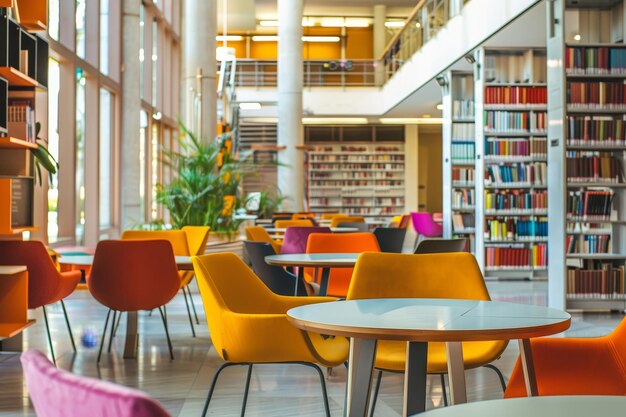
The Central Library houses three floors of open stacks. The ground floor includes the circulation desk, computer lab, and meeting rooms available for public reservation. The second floor contains fiction, nonfiction organized by Dewey Decimal classification, and a dedicated young adult section. The third floor holds reference materials and the Oklahoma Collection, which does not circulate; you must use materials on-site.
Hours run Monday through Saturday, 9 a.m. to 6 p.m., and Sunday, 1 p.m. to 5 p.m. These hours differ from branch locations, so verify before traveling.
Branch Library Network and Service Gaps
Branches serve distinct geographic areas, and which library is closest to you determines practical convenience. The Britton Branch (3817 NW 36th Street) serves neighborhoods north of downtown. The Martin Luther King Jr. Branch (414 NW 23rd Street) sits near the Plaza District. The Southwest Branch (3645 SW 29th Street) covers areas south of I-44. The Crutchfield Branch (5001 N Shartel Avenue) extends service into northeast quadrants.
Each branch holds a basic collection of popular fiction, nonfiction, DVDs, and children's materials. All branches offer computer access and WiFi. None of the branches carry the Oklahoma History Collection or rare materials held at Central. If you need a specific title not shown as available at your nearest branch, the system allows free interlibrary transfer within 3 to 5 business days, but this delay matters if you're on a deadline.
Branches operate on shorter hours than Central: typically Monday through Thursday, 10 a.m. to 6 p.m.; Friday and Saturday, 10 a.m. to 5 p.m.; and closed Sundays. The exception is the Martin Luther King Jr. Branch, which opens Sunday afternoons from 1 p.m. to 5 p.m.
Digital Collections and Membership Requirements
The library system provides digital access through Oklahoma's OHIONET network, which gives cardholders access to e-books, audiobooks, streaming movies, and databases without entering a building. You need a library card to activate these services. Obtaining a card requires proof of address (utility bill, lease, or government mail) and identification. Out-of-state residents can apply for a non-resident card, though the city charges a fee that changes annually; contact the system directly for current pricing.
Digital collections include OverDrive for e-books and audiobooks, Kanopy for documentaries and educational streaming, and several academic databases. The advantage of digital borrowing is no late fees—materials automatically return when the loan period ends. The limitation is that popular titles often have waits of weeks or months, unlike physical collections where you may find the same book immediately available.
Materials You Cannot Borrow
The library system does not lend some categories of materials. Reference books, encyclopedias, and materials in the Oklahoma History Collection stay in the building. Textbooks and highly specialized academic materials are typically not part of public library collections. If you need access to academic journals or research databases, contact the University of Oklahoma or Oklahoma State University libraries; both offer limited public access to certain resources, though policies vary.
Practical Scenarios and Trade-offs
If you live in Edmond or north of the metro area, the Britton Branch is closer than driving downtown, but it will not have specialized materials. Plan for interlibrary transfer if you need something beyond the branch's regular collection. If you need same-day access to a specific research resource, go directly to Central rather than requesting transfer.
If you use the library primarily for internet access, any branch works equally; the computer labs are comparable across locations. If you're researching Oklahoma history or genealogy, Central is mandatory—no other branch has these materials.
If you're a heavy audiobook user but forget to return items on time, digital borrowing through OverDrive eliminates late fees entirely, though you will wait longer for popular titles.
Getting a Card and Basic Fees
A standard library card is free for Oklahoma City residents. You need proof of address and a photo ID. Non-residents pay an annual fee. The card grants access to physical materials, computer access, and digital collections. A temporary card issued on the spot allows immediate borrowing while you wait for a permanent card to arrive.
The system charges no overdue fines as of 2024, a change from prior policy. Materials can circulate for three weeks, renewable online or by phone for another three weeks if not requested by another patron. Late return does not prevent you from borrowing more materials; the only consequence is the item remains marked as checked to you.
Damaged or lost materials are charged at replacement cost. You can pay this fee or return the lost item to cancel charges.
Information Services and Borrowing Limits
Reference librarians at Central and larger branches answer research questions in person or by phone. The system does not maintain a single phone line; you contact the specific branch where you want help. Central's reference desk is the most resourced for complex inquiries.
Borrowing limits vary by material type. You can check out up to 50 items at once, though practical borrowing is usually far less. Holds can be placed on materials currently checked out; the item is held at your chosen location for five business days.