Backup Power Systems for Oklahoma City Homes: What You Need Before Storm Season
Severe weather in Oklahoma City hits hard and unpredictably. Ice storms in February can leave neighborhoods without power for days. Summer thunderstorms knock out lines during peak heat. When your home loses electricity, a backup power system isn't a luxury—it's infrastructure that determines whether you can run a sump pump, keep food from spoiling, maintain heating or cooling, or charge devices to call for help. This guide covers the practical considerations for selecting and installing a backup system suited to Oklahoma City's climate and grid conditions.
Understanding Your Power Needs in Oklahoma City
Before evaluating equipment, determine what you actually need to run. A whole-home generator can power everything; a portable unit covers essentials. The distinction matters because Oklahoma City experiences outages that range from two hours to three days, and installation costs scale sharply with capacity.
Start by listing critical loads: refrigerator (running about 600 watts, 2000 starting watts), furnace or air handler (1000 to 3500 watts depending on type), water heater (if electric), well pump (if applicable), and lighting. Many Oklahoma City residents living in areas served by OG&E (Oklahoma Gas and Electric) find that mid-sized systems handling 5000 to 7500 watts cover the gap between total outage and grid restoration. Residents farther south toward Norman or in rural portions of the metro—where outages sometimes extend beyond OG&E's urban response zone—often choose larger capacity.
Document your home's electrical panel amperage and whether you have natural gas service. Homes with natural gas can power a gas-fueled backup generator indefinitely; those on all-electric systems face fuel logistics that change the calculus entirely.
Fixed Standby Generators vs. Portable Units
A fixed standby generator installs permanently outside your home, connected directly to your electrical panel and often to a natural gas line. When power fails, it starts automatically and transfers load without interruption. Installation in Oklahoma City typically runs $3,500 to $15,000 depending on panel upgrades, gas line work, and concrete pad requirements. A 20 kW unit (adequate for most single-family homes) costs more than a 10 kW but covers greater simultaneous demand.
Portable generators cost $500 to $3,000 and require manual setup and fueling. They connect to home circuits via heavy-duty cords or a manual transfer switch. The trade-off is immediate: lower upfront cost against fuel storage logistics, noise (70 to 90 decibels, audible to neighbors), and the need to run them outdoors because exhaust contains carbon monoxide.
For Oklahoma City homeowners staying put long-term, fixed units justify their expense because they activate during sleep, function in winter ice without operator intervention, and integrate with home automation. Renters or those uncertain about staying choose portable systems. Rental homes should avoid any setup that requires permanent installation; check your lease terms before contracting work.
Fuel Type Considerations for Oklahoma City's Climate
Natural gas backup systems dominate in Oklahoma City because OG&E serves most residential areas and gas supply rarely fails during ice storms or summer outages—the grid fails, not the fuel line. A gas-powered standby generator runs indefinitely as long as your account stays active. Installation requires a licensed plumber or gas technician to run a 1-inch line from your meter; costs run $800 to $2,000 depending on distance and whether trenching is needed.
Propane systems appeal if natural gas isn't available. A 500-gallon tank buried or placed above ground stores enough fuel for roughly 10 days of generator operation at partial load. This matters for rural addresses south of Oklahoma City proper or in areas where OG&E service is limited. Propane delivery during outages can be slow; plan refills before severe weather forecasts.
Diesel backup systems are uncommon in residential Oklahoma City because fuel storage is regulated more strictly than propane and diesel becomes gelled in temperatures below freezing—relevant during Oklahoma's December through February ice events. Skip diesel unless you have commercial application.
Battery Backup and Hybrid Approaches
Battery systems (lithium-ion or lead-acid) store power but require recharging. Pairing batteries with solar panels creates a hybrid system that regenerates during daylight hours; at night or during multi-day outages, stored capacity depletes. A 10 kWh battery system costs $8,000 to $15,000 installed and runs 8 to 12 hours of moderate household demand. This works well for Oklahoma City homes where outages rarely exceed 24 hours and daylight solar gain is reliable in spring, summer, and fall. Winter ice storms remain problematic for solar-dependent systems because cloud cover eliminates generation.
Many Oklahoma City homeowners use batteries as a bridge: battery power handles the first 8 to 12 hours automatically and quietly, then a gas generator kicks in if power hasn't returned. This hybrid strategy minimizes generator runtime and fuel costs while ensuring protection during extended outages.
Installation and Permitting in Oklahoma City
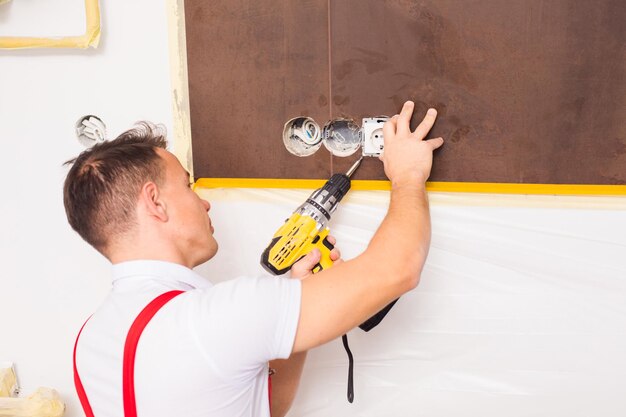
A fixed generator installation requires an electrical permit from the City of Oklahoma City (or your jurisdiction if in the metro area but outside city limits). Permits cost roughly $150 to $300 and involve inspection of the transfer switch, circuit breaker modifications, and grounding. Plan for 2 to 3 weeks from application to final inspection; expedited processing occasionally available but uncommon.
Hire a licensed electrician certified for generator installation. Oklahoma requires electrical work of this scope to be done by someone holding a journeyman license or higher. Expect the electrician to coordinate with OG&E if gas line work extends into the utility's jurisdiction, though most residential gas connections occur on your property.
Site placement matters: generators need clearance from windows, doors, and vents (typically 5 feet minimum per National Fire Protection Association code) to prevent exhaust from entering the home. Noise ordinances apply; check with your city's planning department if your lot is small or neighbors are close. A small concrete pad (4 by 4 feet, 4 inches deep) supports the weight and keeps equipment away from standing water during heavy rain.
When to Schedule Installation
October and November see peak installation demand in Oklahoma City as homeowners prepare for winter outages and summer thunderstorm season approaches. Lead times stretch to 4 to 6 weeks. Schedule earlier if possible. Spring (March through May) has shorter waits. Avoid scheduling during actual storm forecasts; contractors become unavailable and inspectors backlog.
Maintenance Requirements
Fixed generators need annual service: oil change, filter replacement, and a test run under load. Many Oklahoma City installers include one year of service; plan $200 to $400 annually afterward. Portable generators need fewer formal services but require fuel stabilizer if stored between uses and a test run every 3 months to prevent fuel degradation and ensure the engine starts when needed.
Battery systems need annual inspection of connections and state-of-charge testing; costs run $150 to $300.
Final Consideration: Your Outage Pattern
OG&E publishes historical outage data by service territory. Neighborhoods in central Oklahoma City (inside I-235 and I-44) see fewer outages and shorter durations than areas farther north toward Edmond or west toward Yukon. If your address experiences mostly outages under 4 hours, a smaller portable unit satisfies need. If you're in a zone with regular 12 to 24-hour events, a standby system pays for itself in restored peace of mind and operational resilience. Start by naming what you cannot lose power to do—food storage, heating, communication—and size your system to cover that load. Everything else is luxury.