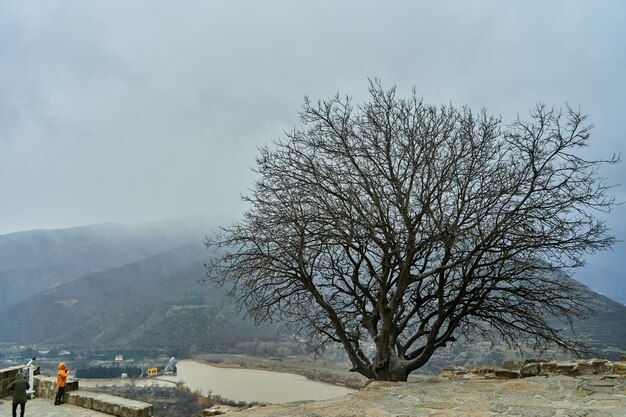
A Single Tree Survived the Oklahoma City Bombing. Here's Why It Matters to the City's Arts and Memory Culture
On April 19, 1995, a truck bomb destroyed the Alfred P. Murrah Federal Building in downtown Oklahoma City, killing 168 people and reshaping the city's relationship with public space and collective memory. In the rubble of that devastation, one American elm tree in the adjacent lot remained standing, stripped of bark and branches but structurally intact. That tree, now called the Survivor Tree, has become the organizing symbol of how Oklahoma City processes trauma through physical place and artistic expression.
This guide explains what the Survivor Tree is, where it stands today, and how it functions within Oklahoma City's broader arts and cultural response to one of the deadliest acts of domestic terrorism in U.S. history. You'll understand not just the tree itself, but the architectural and artistic decisions that surround it, the visitor experience at the Oklahoma City National Memorial and Museum, and how the site compares to other trauma-responsive public art installations in the United States.
The Tree and Its Physical Location
The Survivor Tree grows on the grounds of the Oklahoma City National Memorial, located at 620 North Robinson Avenue in downtown Oklahoma City's Bricktown district, adjacent to the site of the former Murrah Building. The tree stands in an open plaza, cordoned by a low fence, roughly 200 yards north of the reflecting pool that forms the memorial's centerpiece.
The elm is now roughly 80 feet tall and continues to produce new growth each spring. Visitors encounter it as part of a structured walking route through the memorial's grounds, typically entering from the north side and moving south toward the 168 empty stone and glass chairs that represent each person killed. The tree is not enclosed in a building; it exists as an outdoor sculptural object in perpetual negotiation with Oklahoma City's climate and seasons.
The Artistic and Architectural Context
The Oklahoma City National Memorial was designed by architects Hans and Torrey Butzer in collaboration with landscape architect Dale Suh. Completed in 2000, five years after the bombing, the memorial occupies a 3.3-acre site that sits at a deliberate distance from the emotional center of downtown. This location choice reflects an arts and curatorial philosophy: the memorial does not compete with daily commercial activity or overshadow the city's recovery. Instead, it creates a contained space where mourning and remembrance follow a choreographed path.
The Survivor Tree's role within this design is not accidental. In landscape architecture and public memorial practice, a living organism represents regeneration and cyclical time in ways a stone monument cannot. The tree's survival became metaphorical shorthand for the city's own resilience narrative. However, this interpretation is complicated by the tree's visible damage: deep scars in the bark, asymmetrical branching patterns, and the permanent loss of older limbs mark it as a survivor, not a pristine symbol. That distinction matters. The tree does not look healed. It looks like something that endured and continued.
The memorial site also includes the Museum, housed in a separate structure at the south end of the grounds. Admission to the grounds is free; Museum admission costs $12 for adults. The Museum contains photographs, artifacts, video testimony, and a detailed reconstruction of the bombing's events and aftermath. Most visitors spend 30 to 45 minutes on the grounds and 60 to 90 minutes in the Museum, though these timings vary significantly depending on individual engagement and whether someone has a personal connection to the event.
How the Survivor Tree Functions in Public Memory
The tree serves multiple roles simultaneously, and understanding these roles explains why the site attracts over 700,000 visitors annually. For survivors and family members of those killed, the tree is a focal point for private grief and commemoration. Many visitors leave personal objects at the fence, touch the trunk, or sit on nearby benches without moving.
For Oklahoma City residents not directly affected by the bombing, the tree functions as a symbol of municipal identity and pride in recovery. The phrase "resilience" appears frequently in local discourse around the bombing, and the tree has become the visual anchor for that narrative in public and media representation.
For artists and designers, the tree presents a complex case study in how art responds to large-scale tragedy. The Oklahoma City memorial differs significantly from other prominent U.S. sites of traumatic memory. The Vietnam Veterans Memorial in Washington, D.C., uses a polished black granite wall with engraved names, creating a reflective surface where visitors see themselves alongside the dead. The 9/11 Memorial in New York uses two reflecting pools set into the footprints of the Twin Towers, emphasizing absence through architectural form. The Oklahoma City memorial uses a living tree as its primary symbol, which means the memorial's appearance changes visibly from season to season and year to year. A tree that produces new leaves in spring reads differently than the same tree bare in winter. That temporality is built into the artistic concept.
Visiting the Survivor Tree and the Grounds
The Oklahoma City National Memorial grounds are open daily from 6 a.m. to midnight, year-round, with no admission cost. The Museum operates on a separate schedule: Tuesday through Sunday, 9 a.m. to 6 p.m., with extended hours in summer months. Before planning a visit, confirm Museum hours on the Oklahoma City National Memorial's official website, as holiday hours and special closures do occur.
The walking route through the grounds is roughly 0.75 miles and takes most visitors 20 to 40 minutes without entering the Museum. The path is paved and wheelchair accessible. The Survivor Tree itself is visible from multiple angles and can be viewed from a distance or approached closely depending on visitor preference. Benches and shaded areas are distributed throughout the site.
Photography is permitted on the grounds and in the Museum (though some photograph policies restrict certain types of recording). Many visitors photograph the tree, the 168 chairs, and the reflecting pool. The site is heavily used for private reflection and also for school field trips, family visits, and tourist routes through downtown Oklahoma City.
Practical Considerations
Visit timing depends on your purpose. Early morning visits (before 9 a.m.) offer fewer crowds and quieter reflection time. Mid-morning through early afternoon draws more groups, particularly school-aged visitors in spring and fall. Evening visits (after 5 p.m., before dusk) offer longer shadows and different atmospheric conditions.
The site is located on North Robinson Avenue, in close proximity to the Bricktown district and the Oklahoma River. Parking is available in nearby lots and garages; the memorial itself does not operate dedicated parking, though street parking is available on Robinson. The site is also accessible via public transit routes that serve downtown Oklahoma City.
The Survivor Tree remains a living artwork that changes visibly and cannot be separated from the broader memorial site. Its meaning depends on context: the 168 chairs, the two reflecting pools (the "Pool of Reflection" and "Pool of Remembrance"), the Museum exhibits, and the architectural frame all inform how visitors understand the tree's presence.
For anyone interested in how American cities respond to and represent traumatic historical events through public art and landscape design, the Survivor Tree and the Oklahoma City National Memorial constitute a primary case study. The tree's existence, its visible scars, and its ongoing growth form the core of that educational and emotional experience.