Where Oklahoma City's Fairgrounds Fit Into the Year-Round Event Calendar
The Oklahoma City Fairgrounds occupies 114 acres in the city's northeast quadrant, roughly bounded by NE 10th Street and Reno Avenue. Beyond hosting the annual State Fair of Oklahoma in September, the grounds function as a multi-use venue complex that shapes much of the region's event calendar from January through December. Understanding what happens there month to month reveals how the fairgrounds compete with, complement, and sometimes cannibalize programming across other Oklahoma City arts and entertainment zones.
What the Fairgrounds Actually Host
The State Fair of Oklahoma dominates perception. Running for ten days in mid-September (typically around September 17–27, though verify the exact window annually), it draws roughly 1 million visitors. Admission costs $12 for adults, $6 for seniors and children ages 6–11, and children under 6 enter free. The fair operates daily from 9 a.m. to 11 p.m. during its run. The draw is livestock shows, carnival rides, food vendors, craft competitions, and musical performances on multiple stages. The fairgrounds' infrastructure—livestock barns, exhibition halls, open-air pavilions—exists primarily to support this event.
Outside September, the fairgrounds rent space to other events. The Christmas parade used to launch from the fairgrounds; recent years have seen that tradition relocate. Spring brings RV shows, car and truck exhibitions, and craft fairs. Summer hosts rodeos and equestrian competitions. The venue appeals to organizers of events requiring large outdoor space, ample parking, and access to multiple buildings without the noise or traffic restrictions that apply to downtown Oklahoma City's Bricktown district or the closer-in neighborhoods around the Oklahoma City National Memorial & Museum.
This distinction matters: if you're planning an outing around a specific event, the fairgrounds' appeal depends entirely on what's scheduled. It is not a year-round destination with permanent attractions or ticketed exhibitions. Check the official fairgrounds event calendar before making a trip.
How the Fairgrounds Sit Within Oklahoma City's Broader Event Ecosystem
The fairgrounds occupy a particular niche in the metro's entertainment geography. The Stockyard City area, about three miles south, serves as the permanent center for livestock auctions and Western heritage commerce; the fairgrounds' rodeos draw on that cultural proximity but lack the year-round activity. Downtown's Bricktown and the adjacent Plaza District, concentrated near the Oklahoma River, host festivals, farmers' markets, concert venues, and museums that operate independently of the fairgrounds calendar. The fairgrounds are not competitive with those zones for walk-up traffic or restaurant revenue.
What the fairgrounds do offer is consolidation. A large regional event—a livestock show, a home and garden exposition, a truck rally—can rent multiple buildings and surrounding acreage for a single event without spreading across multiple neighborhoods. This makes them economical for organizers but means visitors are making a deliberate trip to a dedicated venue rather than stumbling into entertainment while exploring a neighborhood.
Parking is abundant and free, which differs from Bricktown and downtown areas where parking is metered or lot-based. For families arriving by car (the standard mode in Oklahoma City), this is a practical advantage, particularly during the State Fair when attendance spikes and organized parking becomes essential.
The September State Fair as the Anchor Event
The State Fair of Oklahoma is the fairgrounds' primary purpose. It operates under the direction of the Oklahoma Department of Agriculture, Food and Forestry. The fair runs for exactly ten days each year; these dates shift slightly annually to maintain consistency (typically mid-September). Entry is $12 for adults, and the fairgrounds remain open from 9 a.m. to 11 p.m. daily during the fair. Parking is free.
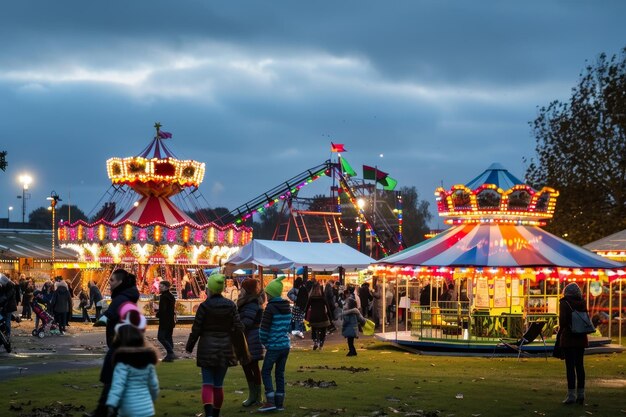
The fair's scale is substantial. Livestock competitions occupy multiple barns and corrals. Agricultural exhibits fill large halls. A carnival section dominates the central grounds, with rides operated by contracted carnival companies. Food vendors range from standard fair fare (corn dogs, funnel cakes, fried butter) to increasingly Instagram-focused offerings that rotate annually. Musical performances happen on multiple stages; headliners in recent years have included regional and national country music acts.
For families, the main appeal is the carnival rides and food; for agricultural producers and enthusiasts, it's competition and networking. For food photographers, it's the annual fried-novelty competition. The fair is crowded during peak hours (late afternoon and evening on weekdays, all day on weekends), which affects both enjoyment and parking efficiency.
One practical insight: arriving before 11 a.m. on a weekday morning reduces crowds significantly. Ride wait times drop. The livestock barns are less packed. Food vendors move faster. If your goal is experiencing the fairgrounds without extreme congestion, weekday mornings, particularly on Monday through Wednesday, are more pleasant than weekend or after-4 p.m. time slots.
Off-Season Programming and Its Reliability
Between October and August, the fairgrounds host events announced monthly, but no permanent programming. This is the critical difference from other Oklahoma City venues. The Oklahoma City Zoo operates year-round. The Philbrook Museum of Art in Tulsa (about 100 miles north) has permanent collections. The fairgrounds have no equivalent baseline.
Winter months typically see Christmas-themed events in November and December, though these vary year to year. Spring (March through May) brings home improvement and RV expos. Summer (June through August) includes smaller regional fairs, equestrian events, and outdoor markets. Attendance at off-season events is a fraction of the State Fair; these events tend to draw local or regional audiences rather than the statewide draw of September.
For trip planning, this means checking the fairgrounds' specific event schedule before committing. A date that looks open on your calendar might have nothing scheduled on the grounds, or it might have something highly specific (a classic car show, a poultry show) that only appeals if you're interested in that particular subject.
Practical Logistics
The fairgrounds are located at NE 10th and Reno Avenue, about 3 miles northeast of downtown Oklahoma City. Driving is the assumed mode of arrival; public transit serves the area less frequently than it does downtown or midtown neighborhoods. Parking is free and plentiful except during the State Fair, when the fairgrounds operate overflow lots and direct traffic. No food or beverage venues operate outside of scheduled events, so plan to eat during the event or before arriving.
The fairgrounds accept cash and card for admission and vendor purchases. Some events charge separate admission; verify specific events on the fairgrounds' website or by phone before attending.
For most visitors, a trip to the fairgrounds aligns with a specific event rather than an open-ended visit. That specificity is not a weakness for trip planning; it simply means the fairgrounds function differently from venues designed for year-round casual visitation.