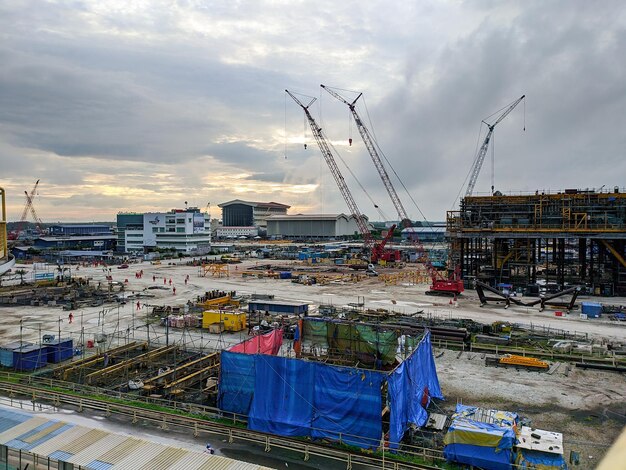
Steel Fabrication as Public Art: How Oklahoma City's Industrial Builders Shape the Skyline
When commercial steel builders work on Oklahoma City's infrastructure, they're not simply assembling frames. The fabrication choices, material specifications, and structural design decisions that builders make directly influence what the city looks like, how light moves through its downtown corridors, and whether future generations will see these structures as functional or iconic. This guide covers how to evaluate commercial steel builders in Oklahoma City, what separates standard work from design-conscious fabrication, and how the city's industrial construction relates to its broader architectural identity.
The Role of Steel Builders in Oklahoma City's Visual Character
Oklahoma City's skyline took its modern shape largely after the 1995 Oklahoma City bombing. Reconstruction prioritized structural resilience and clean lines, creating a different aesthetic than cities that developed continuously. That means contemporary steel builders here operate within a specific context: they're working on a relatively young urban core where decisions about beam profiles, cladding systems, and visible structural elements remain visible in the streetscape.
The Bricktown Entertainment District, redeveloped in the 1990s, demonstrates how steel framework decisions affect public perception. Exposed steel trusses and industrial detailing became a design feature there, not incidental infrastructure. When you walk along Sheridan Avenue or near the Bricktown Canal, the visible steelwork reads as intentional rather than hidden. That choice came from builders and architects working together to make fabrication part of the visual story.
Downtown Oklahoma City's ongoing development around Scissortail Park and the Plaza District shows a different approach: steel frames are mostly concealed behind glass, stone, and metal panels. The structural system is no less sophisticated, but it's invisible to pedestrians. Both approaches require commercial steel builders with different expertise. One demands fabrication that photographs well and reads as craftsmanship. The other requires precision hidden from view.
What Differentiates Commercial Steel Builders Here
The primary distinction between commercial steel builders in Oklahoma City centers on equipment scale and project type specialization. Builders capable of handling 20-story office projects operate under different constraints than those focused on single-story industrial or retail buildings.
Heavy structural work involves beams and columns for multi-story buildings, parking structures, and institutional projects. These require precise connection details, quality control for high-strength steel (often 50 ksi or greater), and coordination with concrete foundations. Builders doing this work typically maintain in-house welding certification and employ structural welders licensed under AWS D1.1 standards. The cost differential between builders often reflects their bonding capacity and insurance coverage for larger projects, not variations in basic competence.
Miscellaneous and ornamental steel covers stairs, railings, canopies, and decorative elements. Projects in Uptown Oklahoma City and the Midtown arts district sometimes emphasize this category because of design preferences. Fabricators who specialize here often have welders trained in visible-quality work, where welds must meet aesthetic standards alongside structural ones. Prices for ornamental work vary widely based on finish level (mill finish, prime coat, stainless steel, powder coat) and design complexity.
Industrial and agricultural steel includes equipment frames, mezzanines, and process structures for manufacturing and food processing operations, which remain present in Oklahoma City's industrial zones. This work tolerates less precision than commercial building work but requires durability in harsh environments. Builders handling this work often use A36 steel (a less expensive grade) and simpler connection methods.
The practical difference: a builder excellent at 12-story commercial work may quote you a price for a warehouse mezzanine that reflects overhead inappropriate to the project, or may simply decline the work. Conversely, a fabricator focused on industrial work might not have the welding quality standards necessary for visible steel in a downtown renovation.
Material Sourcing and Supply Constraints in the Region
Steel material costs vary by grade and mill, but sourcing logistics affect Oklahoma City builders more than you might expect. The nearest major steel mills operate in Texas (U.S. Steel in East Texas) and Arkansas (Nucor in Conway). That distance adds 3 to 7 days to material delivery and introduces vulnerability to transport delays.
Builders typically order structural steel 8 to 12 weeks before installation, and that timeline has shifted since 2020. Lead times for specialty grades (weathering steel, high-strength steel over 65 ksi, stainless) routinely extend to 14 to 16 weeks. For projects in the Arts District or downtown renovation work where material choices carry design weight, confirming availability early in design matters significantly.
A practical check: when evaluating proposals from commercial steel builders, ask what mill they source from and whether the schedule accounts for current lead times. Vague answers ("we'll source the best price") signal that the builder is treating material sourcing as a cost-cutting variable rather than a project constraint. Builders with stable supplier relationships often lock pricing and delivery terms early, reducing schedule risk.
How to Assess Builder Quality Beyond Price
Three evaluation criteria matter most for commercial steel work in Oklahoma City:
Portfolio alignment. Review completed projects similar in scale and type to your needs. If a builder's portfolio is all single-story industrial work and your project is a 10-story office building, the price they quote may not reflect their actual overhead. Ask to visit a completed project and inspect connection details, weld quality, and whether tolerances were held. Visible rust or poor surface prep indicates inadequate quality control.
Certification and bonding. All structural steel work should involve welders certified under AWS D1.1. Ask for current certifications and verify through the American Welding Society database if the project justifies the effort. Bonding capacity (the maximum contract value a builder can guarantee) matters for projects over $2 million. A builder's bonding limit is a hard constraint, not a negotiation point.
Schedule and coordination capacity. Steel erection timelines are compressed relative to other building systems. A builder must coordinate delivery, crane scheduling, and sequencing with concrete work, electrical rough-in, and facade installation. Ask how they manage concurrent trades. Answers mentioning written coordination schedules and regular site meetings are more reliable than general assurances.
Working with Builders on Design-Forward Projects
If your project involves visible steel (architectural structural systems, exposed connections, specialty finishes), the builder should have input during design, not after. This happens through a process called value engineering, though that term often implies cost reduction. Here it means fabrication expertise improving constructability and appearance simultaneously.
Projects in the Midtown Cultural District and Plaza District often emphasize this collaboration because the visual quality of steel elements contributes to neighborhood character. Builders comfortable with this approach discuss options like fire-protective coatings, bolt cover plates, and connection detailing that affects how the structure reads from the street. This conversation requires a builder who understands architecture, not just fabrication.
Local Context and Project Timing
Oklahoma City's construction market moves slower than Dallas or Houston, meaning fewer builders compete for projects and lead times can be longer. That also means established builders here often have more stable supplier relationships and fewer schedule surprises than national firms managing multiple markets simultaneously.
The city's climate, with significant temperature swings and occasional ice storms, affects steel work less than in northern climates but still demands attention to moisture control during fabrication and storage. Builders familiar with Oklahoma conditions account for this in scheduling and surface prep protocols.
What to Ask Before Selecting a Builder
Request a timeline that separates fabrication duration from erection timeline. These are different. Fabrication might take 8 weeks; erection might take 3. A vague "12-week delivery" masks whether the builder will have material ready when the project needs it.
Confirm the scope of connection design. Some builders design connections; others fabricate to designs prepared by a structural engineer or architect. This affects both quality assurance and liability if issues arise in the field.
Ask whether the proposal includes touch-up painting, bolt tightening after erection, or other post-installation work. These items vary between proposals and affect actual total cost.
The decision ultimately rests on fit between the builder's capabilities and your project's demands. A builder excellent for a 50,000-square-foot warehouse is not necessarily the right choice for a downtown mixed-use development. Matching scope to expertise, not selecting the lowest price, produces better outcomes.