What Lighthouse Oklahoma City Actually Offers Arts Visitors
A decommissioned Coast Guard station turned arts venue doesn't fit Oklahoma City's typical cultural footprint, which makes Lighthouse Oklahoma City worth understanding on its own terms rather than as a supplement to the Paseo Arts District or Crystal Bridge Contemporary Art Museum.
This article covers what Lighthouse does as a space, how it functions within OKC's arts ecosystem, and whether it matches your visit goals.
The Space and Its Operations
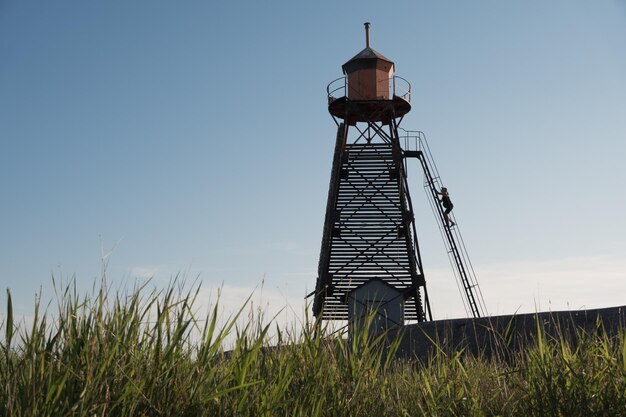
Lighthouse Oklahoma City occupies a 1970s-era structure in Midtown, several blocks south of the Film Row district. The building's identity as a former navigational facility is architectural fact rather than marketing concept: the cylindrical tower and utilitarian design remain visually distinct from converted warehouses elsewhere in the city.
The venue operates as a nonprofit arts incubator focused on emerging and mid-career artists. It functions simultaneously as studio space, exhibition gallery, and event venue. This mixed-use model creates operational complexity. On any given visit, you may encounter artists actively working in studios rather than a curated show waiting for visitors. Hours are irregular and often tied to specific programming rather than a fixed schedule, which means checking ahead is not optional. The organization typically announces events through its website and social channels rather than maintaining predictable walk-in availability.
Admission is free when exhibitions are open. This removes financial barriers to entry but also reflects the space's position as a community arts venue rather than an institution with endowment-backed programming.
Position Within OKC's Arts Structure
Oklahoma City's established arts infrastructure centers on three zones: the Paseo Arts District in Midtown (galleries, studios, artist housing), the Downtown Core Arts District (Crystal Bridge, OKC Museum of Art, theater venues), and Film Row (independent galleries, production studios).
Lighthouse operates at a different scale and with different programming assumptions than these anchors. The Paseo District galleries function as fixed retail spaces with standard hours and curated inventory. The Downtown museums draw national attendance and carry institutional credibility. Film Row emphasizes media production and photography alongside visual arts.
Lighthouse instead models itself as an accessible production space, prioritizing artist residency and emerging work over visitor experience refinement. This distinction matters. If you're seeking finished exhibitions in a climate-controlled gallery, you'll find more reliable offerings at Crystal Bridge (closed Mondays, admission $15, operating since 2011) or the OKC Museum of Art (admission by donation, permanent collection strong in Oklahoma regionalism). If you're interested in seeing artists during their working process or in supporting early-stage creative work, Lighthouse's informal model serves a real need.
The venue also serves as informal meeting ground for OKC's younger and less-established artistic community, a function that doesn't show clearly in promotional materials but shapes its actual role in the city's cultural life.
What Lighthouse Hosts
Programming centers on visual arts exhibitions, artist talks, and creative workshops. Past programming has included painting, printmaking, sculpture, and mixed-media installations. The organization has also hosted film screenings and performance art, though these are occasional rather than regular offerings.
Because the venue operates with limited full-time staff and relies partly on visiting and resident artists, programming density varies by season. Winter months typically see more concentrated activity. Summer may feature fewer public events as artists manage competing commitments. This unpredictability is structural, not temporary.
Rental availability means the space also hosts independent curators, artist collectives, and community organizations seeking affordable event space. This generates cultural activity beyond the organization's own programming but requires you to monitor their events calendar rather than assume regular content.
Practical Considerations for Your Visit
The Midtown location is accessible via car with parking on surrounding streets, though parking availability fluctuates with nearby residential and retail activity. Public transit connections through EMBARK are limited; this is not a walkable destination without a vehicle unless you're already in the immediate neighborhood.
The building itself reflects its institutional origins. Expect concrete, industrial materials, and minimal climate control in some areas. This aesthetic appeals to artists and fits the nonprofit's operational constraints; it may not feel welcoming if you prefer polished gallery environments.
Visiting requires advance planning. Check the website for current hours and upcoming exhibitions before making the trip. The organization's communication style is direct and functional rather than elaborate, so event announcements may lack extensive description. Contact them directly if you have specific interests; staff can often provide context about artists or upcoming projects that doesn't appear in standard listings.
The $0 admission cost and emerging-artist focus make Lighthouse most valuable to visitors interested in OKC's creative infrastructure rather than finished institutional art. If you want to understand where the city's next generation of artists works and shows, this space offers genuine access. If you're seeking polished exhibitions from established artists, the Downtown Core Arts District institutions will feel more structured.
The Actual Takeaway
Lighthouse Oklahoma City functions as a working studio and incubator, not a destination gallery. Its value lies in revealing how Oklahoma City's younger artists produce and exhibit work outside institutional frameworks. That's worth a visit if you're curious about the mechanics of arts communities rather than seeking a specific exhibition.