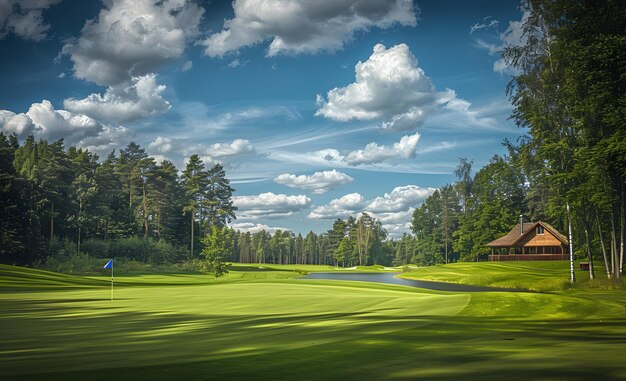
Playing Lake Hefner: What to Expect from Oklahoma City's Most Accessible 18-Hole Course
Lake Hefner Golf Course sits on the northwest shore of the reservoir that defines OKC's landscape, offering a public 18-hole layout that serves a specific role in the city's golf ecosystem: it's neither the premium destination nor the budget pitch, but rather the reliable middle ground where casual players and competitive locals coexist. This guide covers course conditions, how it compares to other public options in the metro area, practical logistics, and what kind of round you should expect.
The course opened in 1972 and occupies one of the city's most recognizable locations. From certain holes, you play toward views of the water and the downtown skyline, though the course does not hug the shoreline throughout; much of it runs through tree-lined fairways north of the driving range. The routing feels dated in the best sense: straightforward, without forced carry shots or island greens designed to punish mid-handicap players.
Course Conditions and Design Reality
Lake Hefner runs to par 70, playing 6,304 yards from the white tees and 6,868 from the back. The design is notably flat, which is typical for Oklahoma City courses; elevation change is minimal, and drainage is functional but not exceptional. Bermuda grass dominates the rough and fairways, which means firm, unpredictable lies in summer and dormancy by November.
The greens are small by modern standards, averaging around 4,000 square feet, which rewards accurate iron play and punishes lag putting. They hold shots reasonably well during the growing season (April through September) but become firmer and faster as summer advances. In winter, they thin out noticeably, and course playability drops between late November and February.
The back nine, particularly holes 12 through 16, is tighter and more tree-bound than the front, playing to a different rhythm. Hole 14 is a 150-yard par 3 over water to an elevated green; it's the course's signature hole and also its most demanding short par 3 in the metro.
Comparison to Other OKC Public Courses
Oklahoma City has three main public 18-hole options within the city limits, and their positioning matters for decision-making.
Thunderbird Golf Club (northwest OKC, near Edmond) plays to a more aggressive design with water on 12 holes and higher green fees. At roughly $15 to $20 more per round than Lake Hefner, it targets better golfers and charges accordingly. The course is in consistently better condition during peak season, with more aggressive maintenance budgets reflected in firmness and speed.
Pennick Golf Club (south OKC, Goro Avenue) is a 9-hole executive course designed for faster rounds and higher volume. It's not a direct competitor but serves golfers with 90 minutes to spare rather than a full four hours. Green fees run significantly lower.
Lincoln Park Golf Course (northeast OKC) is the other full 18-hole public option and plays to similar conditions and price points as Lake Hefner, though with slightly longer yardage and more water hazards on the back nine. Both attract comparable skill levels; the choice often comes down to convenience and which routing feels more comfortable.
Lake Hefner's position: it's the least conditioned of the two full 18-hole publics in OKC proper, but also the most forgiving in terms of difficulty and shot-making demands. Beginners and mid-handicappers advance here more comfortably than at Lincoln Park.
Green Fees and Rates
Weekday rates (Monday through Friday): $39 to $45 for 18 holes with cart, depending on season. Walking is permitted but not significantly discounted; cart fees are bundled into the rate.
Weekend rates (Saturday and Sunday): $49 to $55 for 18 holes with cart.
Senior rates (62 and older): $33 to $39 weekdays, $43 to $49 weekends.
Rates are lower in winter (December through February) by approximately $5 to $8, reflecting slower play and lower maintenance. Nine-hole rates are available at roughly 60 percent of 18-hole cost. The pro shop accepts online booking through the city's Parks and Recreation portal, which can reserve tee times up to seven days in advance. Walk-up play is common on weekday mornings but less reliable on weekends.
Practical Logistics
Lake Hefner is reached via NW 36th Street from central OKC; parking is free and ample. The clubhouse includes a small pro shop with rental clubs available for $25 to $35 (verify current rates with the pro shop). Range balls cost approximately $10 to $12 per bucket. Food service is limited to a small snack bar; no restaurant or full dining is on-site. Bring water or plan to purchase it at the turn.
The course closes at dusk year-round. Starting times begin at 7:00 a.m. during daylight saving time and 7:30 a.m. in winter. A typical round takes 4 hours 15 minutes to 4 hours 45 minutes depending on group size and traffic ahead.
The course is walkable for younger players or those familiar with the layout, though cart rental is nearly universal. A pull cart is not commonly available for rent; walking with your own gear is the alternative to a motorized cart.
Who Plays Here and When
Lake Hefner draws municipal league players, retirees, families, and visiting golfers from surrounding suburbs (Edmond, Norman, Midwest City). Wednesday mornings attract the highest proportion of single-player rounds and fastest pace. Saturday mornings and early Sunday afternoons are heaviest; expect backed-up groups and 4 hour 45 minute rounds. Weekday afternoons in summer thin out significantly.
The course hosts a municipal tournament schedule April through October, which occasionally restricts tee time availability on certain weekends. The pro shop publishes these dates; confirm before booking if you're planning a specific weekend.
The Practical Takeaway
Lake Hefner functions as the accessible entry point to OKC public golf. It's not in premium condition, it's not scenic in the way courses overlooking deep water can be, and it does not demand or reward the shot-making precision that Thunderbird does. It is, however, consistently open, reasonably maintained, and structured around the skill level of the average golfer in the metro area. If you're learning the game or looking for a straightforward, unpretentious round without premium pricing, this is the most direct path.