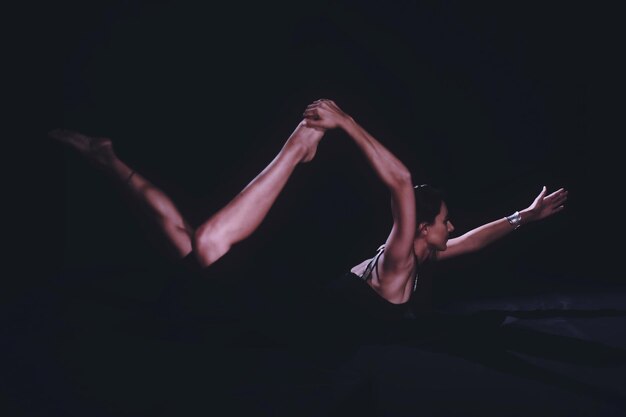
oklahoma City Contemporary Ballet in Oklahoma City: Precision and Repertoire Beyond the Usual
Oklahoma City Contemporary Ballet is a mid-sized professional dance company that splits its season between original works by invited choreographers and classical pieces, performing roughly six to eight productions annually in a city where dance programming otherwise leans toward university departments and touring Broadway shows.
What Oklahoma City Contemporary Ballet Actually Is
OCCB operates as a nonprofit resident company with a core ensemble of roughly 12 to 18 dancers, supplemented by guest artists for specific productions. The company performs at venues across Oklahoma City, including the Civic Center Music Hall and smaller black-box theaters depending on production scale. Unlike university dance programs, which prioritize student training, or major touring productions, which rotate through for single-week runs, OCCB builds continuity with recurring dancers and develops material over multiple seasons. The company sits between casual community performances and the institutional weight of larger regional ballet companies.
Programming, Ticket Pricing, and How to Book
OCCB typically presents four main-stage productions per season, with ticket prices ranging from $25 to $45 for general seating, depending on whether a show is a smaller experimental work or a full-evening production. Student and senior discounts of $5 to $10 per ticket are standard. Performances run Thursday through Saturday for two to three weeks per production. Tickets are sold through the company website and the Civic Center box office; advance purchase often provides the widest seat selection and timing flexibility.
The company's season calendar is typically announced in June for the following fiscal year. Production themes rotate between narrative ballet (recent seasons have included a three-act Nutcracker adaptation), experimental mixed-repertoire evenings, and contemporary collaborations with local choreographers. Each production is distinct in length and intensity, so checking the specific show description before buying is worthwhile.
How OCCB Compares to Other Oklahoma City Dance Venues
Oklahoma City has several dance performance outlets, and each serves a different purpose. The University of Oklahoma School of Dance, based in Norman about 20 miles south, produces student-centered performances with lower ticket costs ($10 to $15) but less consistent professional staging; seasons are tied to the academic calendar, with main performances clustered in November and April. Lyric Theatre, also in Oklahoma City, focuses primarily on musical theater and opera, occasionally booking touring ballet companies like American Ballet Theatre when they pass through; those productions are higher-budget, one-time events, and ticket prices reflect that (typically $40 to $80). OCCB occupies the middle ground: professional-quality execution without the institutional overhead of a major regional ballet company like those in Dallas or Tulsa, and with more stability and local repertoire development than a touring show.
For someone seeking consistent, locally-made contemporary dance on a regular schedule, OCCB is the primary option. For classical ballet purists wanting a large classical company, the nearest significant alternative is the Tulsa Ballet, roughly 100 miles northeast, which operates a much larger company and season.
Who OCCB Suits and Who It Does Not
OCCB works well for dance students and teaching artists who want to see how professional artists approach contemporary work; for dance-literate audiences who prefer original choreography over classical reproductions; and for people with limited budgets who want professional-level dance without traveling outside Oklahoma City. The company's experimental and collaborative productions particularly attract artists from other disciplines.
OCCB is a poorer fit for viewers seeking only large-scale classical productions, families with very young children (experimental works may not have obvious narrative hooks), or people who prefer a single, guaranteed yearly event. The company's smaller scale means some productions are genuinely experimental and may not appeal to all tastes; reading reviews or watching clips before buying is practical.
What the First Visit Involves
Arrive 15 minutes early to the venue. Check the program to see whether the production is narrative (like Nutcracker, which will run roughly two hours including intermission) or mixed-repertoire (typically 75 to 90 minutes, no break). If the venue is the Civic Center Music Hall, on-site parking is available in adjacent lots ($5 to $8); if the show is in a smaller black-box theater, parking will vary and should be confirmed when you book. Most productions are not costume-heavy enough to require formal dress, though the audience is typically mixed in attire. The lobby usually has a small concession area (non-alcoholic drinks, candy, no full food service).
After the show, OCCB often hosts a brief lobby meet-and-greet with dancers, particularly after opening or closing performances. This is informal and optional, but it's a genuine opportunity to ask questions.
Hours, Parking, and Logistics
OCCB does not have a permanent home or year-round office hours; all scheduling and ticketing happens through the website. Performance times typically begin at 7:30 p.m. Thursday and Friday, 2 p.m. and 7:30 p.m. Saturday, with occasional Sunday matinees. Exact dates and venues shift each season, so the calendar page should be checked at least two months in advance if you are planning around specific productions.
Parking depends entirely on venue. Civic Center Music Hall has dedicated lots nearby; smaller theaters may offer street parking only. Confirm parking details when you buy tickets.
OCCB fills a specific gap in Oklahoma City's performing arts calendar: regular professional dance that is locally developed, responsive to community artists, and affordable. For dancers and dance audiences, it is the consistent local anchor; for others, it is an accessible entry point to see how contemporary choreographers use the form.