Grantham School of Dance in Oklahoma City: Pre-Professional Training and Recreational Classes
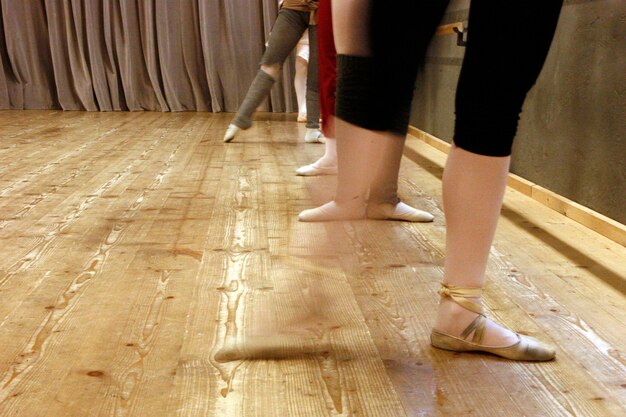
Grantham School of Dance is a ballet-focused academy in Oklahoma City offering pre-professional instruction alongside recreational classes for children and adults. Located on the city's northside, it serves families looking for structured ballet training without the scale or competition-heavy model of larger regional academies.
What Grantham School of Dance actually is
The school operates as a teaching studio rather than a performance company, though advanced students participate in recitals. Its curriculum centers on classical ballet technique, with some studios incorporating contemporary and jazz as supplementary disciplines. The facility is smaller than Oklahoma City Ballet's associated school but larger than single-instructor home studios, positioning it as a middle-ground option for families seeking serious training without tournament or touring commitments.
Classes, age groups, and pricing
Grantham offers age-stratified classes beginning with pre-ballet for children ages 3 to 5, progressing through elementary, intermediate, and advanced levels. Pricing typically ranges from $60 to $120 per month for recreational students taking one to two classes weekly. Pre-professional track students, who train multiple times per week and follow a more rigorous curriculum, pay higher tuition; confirm current rates directly, as annual adjustments are standard industry practice. The school commonly offers trial classes or introductory sessions; calling ahead ensures availability and any enrollment promotions.
Class schedules lean toward afternoon and early evening slots to accommodate school-age students, with some weekend options available.
How it compares to other Oklahoma City dance instruction
The city's dance instruction landscape splits into three tiers. The Oklahoma City Ballet School, attached to the professional company, emphasizes pre-professional and competition-track training with higher tuition and audition-based entry for advanced levels. Smaller independent instructors and home studios offer cheaper rates (often $40 to $80 monthly) but limited class variety and facility amenities. Grantham fills the middle: more affordable than the ballet company's school, with better facilities and peer cohorts than solo instructors, yet accessible to families seeking serious instruction without the audition barrier or expense of elite academies. Choose Grantham if you want structured ballet curriculum, multiple weekly class options, and a studio environment; choose Oklahoma City Ballet School if your child is competing or targeting professional ballet pathways; choose independent instructors if budget is the primary constraint and your child is beginning recreationally.
Who it suits and who it does not
Grantham works well for children ages 3 and up with genuine interest in ballet, families willing to commit to consistent weekly attendance, and students seeking classical technique foundation. It suits adults returning to dance or starting as beginners. It does not suit families seeking only drop-in classes, competitive dance (jazz, hip-hop, competition circuits), or students needing adaptive instruction; the school's focus is ballet fundamentals in a traditional studio model.
What a first visit involves
Contact the school to arrange a trial class or observation. You will attend a single session in street clothes or basic dance wear; no pointe shoes required for introductory levels. The instructor will assess your child's age, coordination, and comfort level, then place them in an appropriate class. Expect a 45-minute to 60-minute class following standard ballet pedagogy: barre work, center work, and simple combinations. Parents may observe or stay in a lobby area depending on the child's age.
Hours, location, and logistics
The school operates Tuesday through Saturday, with most classes falling between 3 and 7 p.m. on weekdays and 9 a.m. to 2 p.m. on Saturdays. Verify specific hours on the studio's website or by phone, as scheduling adjusts seasonally. The northside location includes dedicated parking. No public transit stop is immediately adjacent; a car is practical for regular attendance.
Why Grantham matters in Oklahoma City's performing arts
The school sustains ballet as an accessible discipline for children beyond the aspirational track of the professional company, anchoring a middle tier of instruction that keeps the art form rooted in neighborhoods rather than isolated to downtown or high-barrier programs.