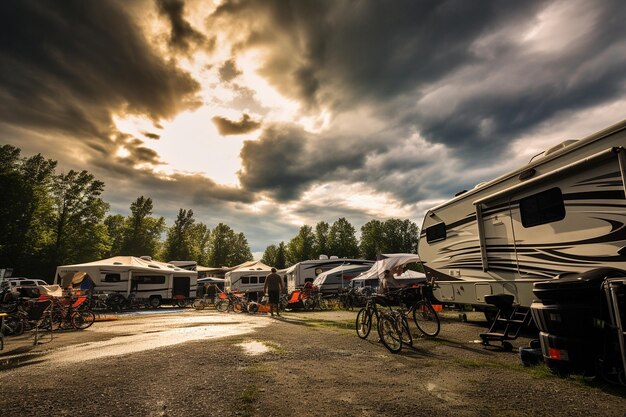
RV Parking Near Downtown Oklahoma City: What Rockwell Offers Against Local Alternatives
This guide covers RV park options in Oklahoma City's metro area, with focus on Rockwell RV Park's position in the local market, what makes it competitive, and how to decide whether it fits your trip. You'll understand pricing tiers, amenity differences, and proximity trade-offs that matter when you're choosing between parks for a stay of a few nights to several weeks.
Rockwell RV Park operates in Oklahoma City proper, which immediately separates it from most RV accommodation in the region. Most parks cluster in outer areas or suburbs where land is cheaper and zoning is simpler. Being in-city changes the calculus for travelers who want walkable access to downtown restaurants, the Bricktown district, or the Arts District rather than driving 20 to 40 minutes from a suburban park.
The park sits positioned for guests who prioritize location over sprawl. Urban RV parks trade the acreage and dramatic layouts you see in rural parks for proximity to actual destinations. That trade-off is real and worth naming: you won't find a large pull-through with wide-open sightlines, but you will walk to galleries, concert venues, and restaurant clusters without needing your vehicle.
Rockwell's lot configuration reflects this urban constraint. The park operates on a tighter footprint than regional competitors like parks on I-35 north of the city or those near the airport. This means back-in spots rather than pull-throughs, and less room for slideout extensions on larger rigs. RVers with Class A motorhomes over 35 feet or dual-axle trailers should confirm space availability before booking, as the park's site plan doesn't accommodate all rig sizes equally.
Daily rates at Rockwell run higher than suburban Oklahoma City parks, typically in the $45 to $65 per night range depending on hook-up level and season, though rates shift seasonally and should be verified directly. Parks 15 to 20 miles out, in areas like Yukon or Edmond, charge $25 to $40 nightly. That 50 to 75 percent premium reflects location value, not necessarily superior amenities. If you're staying five nights in the city to visit the Oklahoma City Zoo, the Stockyard City livestock auction, or the National Cowboy and Western Heritage Museum, the convenience of staying closer may justify the cost. If you're using Oklahoma City as a pass-through and don't need walkability, an outlying park saves money without real loss.
Hook-up quality matters more than it should. Rockwell provides full-service spots with 50-amp electric, water, and sewer at the premium tier. Not all parks in Oklahoma City offer 50-amp; some regional parks max out at 30-amp, which limits what appliances you can run simultaneously in your RV. If you're working remotely, running air conditioning, and cooking simultaneously, 50-amp is not a luxury. Confirm this detail before booking anywhere in the Oklahoma City area, as the difference between 30 and 50 is the difference between comfortable and frustrating electricity management.
The park includes basic amenities: laundry facilities, a dump station for day-use visitors, and typically a small office with supplies. It does not operate on the scale of resort-style RV parks found in tourist destinations like Colorado or Arizona, where you'd expect multiple pools, activities programming, or on-site restaurants. That's consistent with Oklahoma City's RV park market generally. The city attracts business travelers, livestock auction attendees, and people visiting family rather than vacation tourists, so parks optimize for efficient layovers, not destination experiences.
Proximity decisions break down by neighborhood. Rockwell's location gives you realistic walking distance to Bricktown's restaurant row and entertainment venues. The Stockyard District, where the weekly cattle auction runs Tuesday and Thursday mornings, is a short drive. The Arts District near NW 10th Street is accessible by car in under 10 minutes. These aren't equally valuable depending on your trip purpose. If you're in Oklahoma City for the auction, proximity to the Stockyard might be your priority. If you're visiting for dining and galleries, Bricktown access changes the trip calculus.
Competing parks in outer areas offer different profiles. Parks northeast toward Edmond put you near shopping and residential areas but require a 20-minute drive to reach downtown attractions. Parks south toward Norman orient you toward the University of Oklahoma campus and college-town amenities rather than city center. Parks along the I-44 corridor near the airport serve travelers making quick stops between destinations. None of these is objectively better; they're better for different reasons.
Seasonal patterns affect booking strategy. Oklahoma City's summers (June through August) bring heat that can strain RV air conditioning systems; if you're parking in full sun for several days, the lack of shade at some spots matters. Spring and fall offer more comfortable conditions. Winter stays are feasible but confirm that full hook-ups include heated water lines, as freezing overnight is common in Oklahoma. Parks don't always specify whether water infrastructure is winterized.
Long-term stays, defined locally as anything over two weeks, typically unlock discounts. Ask about weekly and monthly rates when booking; many parks price these 20 to 35 percent below nightly rates. For month-long work trips or extended visits to Oklahoma City, those discounts compound meaningfully. Rockwell and comparable urban parks usually require advance notice for long-term bookings, as they manage availability differently than nightly reservations.
One practical distinction: confirm whether the park allows dogs and what the restrictions are. Many Oklahoma City RV parks permit pets but cap it at two animals or charge pet fees of $5 to $10 per night. If you're traveling with a dog, this detail affects your choice and budget.
Booking direct through the park rather than third-party aggregators often yields better rates and clarifies house rules. RV parks operate on thin margins and typically offer their best pricing to direct customers. Call or visit the park's website to confirm current rates, availability for your specific rig size, and any seasonal closures or maintenance schedules.
Choose Rockwell if you want to be in the city, value walkability to restaurants and attractions over space and amenities, are driving a rig under 35 feet, and are willing to pay a location premium. Choose an outlying park if you need maximum space, lowest cost, and don't need immediate access to downtown. Your trip purpose and rig size should determine the decision, not marketing language about any single park.